
Floor Leveling in Largo, FL
SVR FLOORS provides floor leveling for homeowners who need the surface corrected before a new finish can be installed properly. Uneven slabs, dips, high spots, patched areas and old substrate problems do not stay hidden once laminate, tile, vinyl plank or hardwood goes down. A strong leveling job creates the surface the finished floor depends on.
Small unevenness can create bigger installation problems later
A lot of leveling jobs start with a homeowner saying the floor is “only a little uneven.” That is often enough to cause real issues once new flooring is installed. Long runs of vinyl plank can telegraph dips. Tile can show lippage. Laminate joints can stress. Hardwood can feel inconsistent from one section of the room to the next.
Floor leveling is usually the step that turns a risky installation into a stable one. It creates the flatness and continuity the finish floor expects instead of asking the finished material to hide substrate defects it was never designed to solve.
Many floors are close enough to walk on but not close enough to install over well. That difference matters once the goal is a finished floor that looks consistent and feels solid underfoot through the whole room.
This is why leveling comes up so often before tile, laminate, vinyl plank and hardwood projects. The next flooring category often raises the standard the room has to meet.
What leveling usually corrects
- Dips and low areas that create bounce, unsupported sections or visible irregularity
- High spots that interrupt layout flow and make transitions harder to resolve cleanly
- Old patches and inconsistent repairs that become obvious under more exacting flooring types
- Mixed surface behavior where one part of the room performs differently than the next
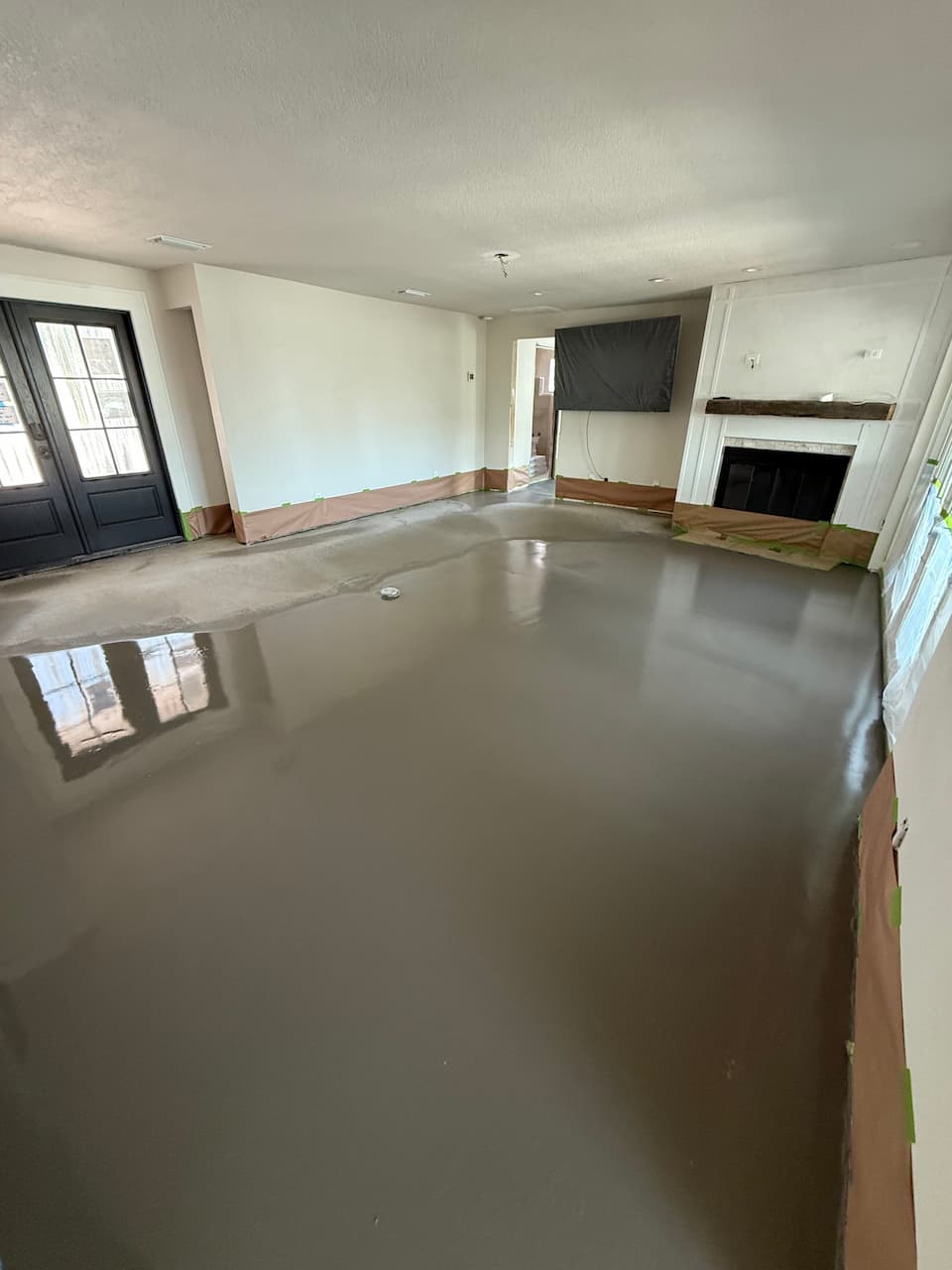
The value of leveling usually shows up after the new floor is installed
Homeowners do not usually call for floor leveling because they want leveling itself. They call because they want the next floor to install properly and look the way it should once the job is complete.
Helps control lippage and visual unevenness
Tile is one of the least forgiving categories over an inconsistent base. Better flatness helps the finished field look cleaner and feel more intentional.
Reduces stress on locking joints
Floating laminate performs better when the floor beneath it is appropriately prepared, especially through longer runs and visible room connections.
Improves feel and visual consistency
Vinyl plank can telegraph dips and imperfections more than homeowners expect, especially under brighter light and through connected living spaces.
Supports a more stable finished floor
Hardwood rewards better prep because the installation feels more substantial when the floor underneath is not fighting against it.
What floor leveling usually looks like on a real project
The process is not just pouring material and hoping for the best. It starts with identifying what kind of unevenness exists, where it occurs and what finished flooring is planned afterward. That context shapes the prep, the corrections and how the room is brought into a more installable condition.
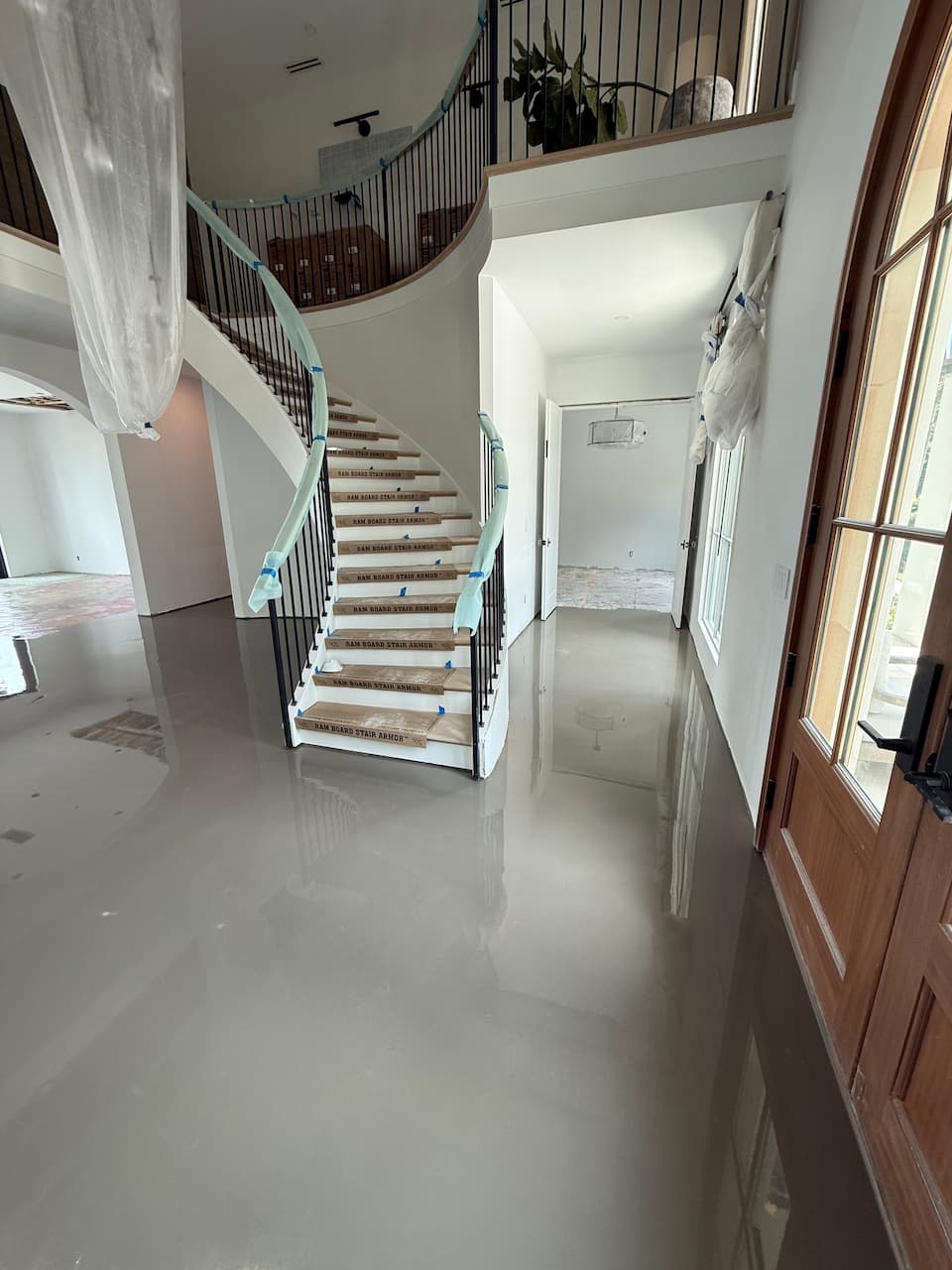
The leveling approach has to match both the current substrate and the new flooring plan. Good prep is not generic. It is tied to what the room needs next and what tolerance the finished flooring requires.
When homeowners usually realize the floor needs correction
Some floor problems are obvious, but many only become clear when a homeowner starts planning new flooring and realizes the current surface is not giving them a reliable starting point.
Floor leveling often becomes necessary when the room no longer behaves consistently
Homeowners may feel the problem underfoot, see it during removal or discover it only after they start comparing materials and learn the new floor will need a flatter base than the room currently has.
- Visible low areas or rocking furniture in parts of the room
- Transitions that feel awkward or sit at inconsistent heights
- Previous patchwork or repaired sections that do not blend into the surrounding floor
- Concern that the next flooring choice will only magnify what is already there
The substrate often tells a different story once the old floor comes out
Some rooms announce the problem early through dips, slopes or inconsistent transitions. Others only reveal it after removal, when old adhesive, patched concrete, damaged wood subfloor sections or hidden irregularities make leveling part of the real scope.
- Whole-home refreshes and multi-room projects frequently expose the need for better flatness
- Connected layouts raise the bar because inconsistency becomes easier to notice across longer runs
- It is usually smarter to solve the substrate early than ask the finish floor to hide problems later
Questions about floor leveling in Largo
These are the questions that usually come up when a homeowner is trying to understand whether the unevenness is serious enough to address and how it affects the flooring planned afterward.
Do I need floor leveling before installing new flooring?
Not every room needs it, but many do. If the floor has dips, high spots, inconsistent patches or transition problems, leveling may be necessary to give the next floor a more reliable surface.
Can uneven floors cause problems with vinyl plank, laminate or tile?
Yes. Different materials show the problem in different ways. Tile may reveal lippage, laminate joints can stress and floating floors may feel or sound wrong if the substrate is not sufficiently prepared.
Is floor leveling only for concrete slabs?
No. Leveling and correction concerns can come up on both concrete and wood-based subfloors depending on the condition of the room and the flooring planned afterward.
What are common signs that my floor might need leveling?
Dips, slopes, rocking furniture, visible patched sections, awkward transitions and concerns about how the next floor will sit are all common signs that the substrate may need correction first.
Does leveling improve the finished look of the new floor?
In many cases, yes. Better flatness and continuity underneath the finish floor usually lead to a cleaner appearance, better feel underfoot and fewer visible installation compromises.
Do you serve areas outside Largo for floor leveling?
Yes. SVR FLOORS serves Largo as the core location and also works in nearby Pinellas County communities including Clearwater, St. Petersburg, Palm Harbor, Dunedin and Seminole depending on project scope and scheduling.
Talk through your floor leveling project with a local Largo contractor
If you know the floor has uneven areas, or you are planning new flooring and want to make sure the substrate is ready first, we can review the room, the surface condition and what the next installation will require before the project is scheduled.
Request a leveling estimate
Share what flooring is planned, where the uneven areas are and whether the issue is showing up as dips, high spots, patched sections or transition problems.
- The flooring you plan to install after the leveling work is completed
- Where you notice dips, high spots, rocking furniture, hollow areas or awkward transitions
- Whether the existing surface is concrete, wood subfloor, old tile, old adhesive or patched material
- Whether this is one room, a connected layout or part of a larger flooring replacement project
Tell us what the surface is doing now
Send the room details, planned flooring type, visible problem areas and any transition or substrate concerns you already know about.