
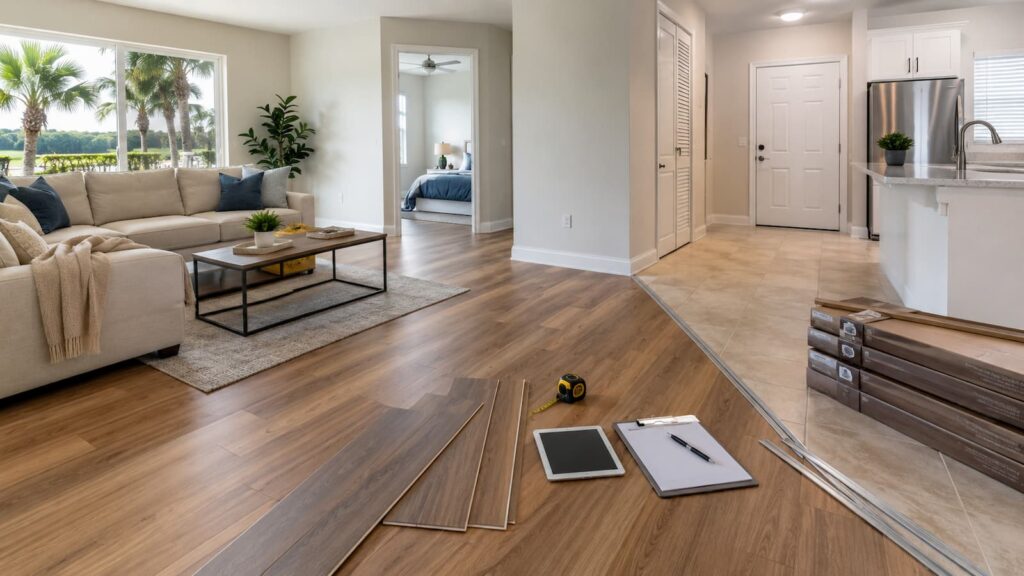
Choosing flooring for a rental property is different from choosing flooring for your own home. In a personal home, you may choose the material you love most, even if it needs more care. In a rental property, the floor has to work harder. It needs to look good for listing photos, feel clean when a tenant moves in, handle everyday wear, survive occasional neglect, and be practical to repair or replace between tenants.
The best rental property flooring is not always the most expensive flooring. It is also not always the cheapest. The right choice is the material that gives you the best balance of durability, moisture resistance, maintenance, repairability, tenant appeal, and long-term cost. A low upfront price can become expensive if the floor fails after one lease. A premium floor can be a poor investment if tenants damage it easily or if repairs are difficult.
For many rental homes, luxury vinyl plank, often called LVP, is the best all-around flooring option. It looks modern, handles everyday moisture better than laminate or hardwood, feels more comfortable than tile, and works well in living rooms, bedrooms, hallways, and many kitchens. For bathrooms, laundry rooms, wet entries, and high-moisture areas, tile is often the stronger long-term choice. Laminate can work in dry, lower-risk rooms when budget matters. Hardwood can add premium appeal in higher-end rentals, but it usually requires more caution and maintenance.
Rental flooring decisions also depend on the type of property. A long-term single-family rental has different needs than a short-term vacation rental. A pet-friendly property needs a different floor than a strict no-pets unit. A coastal Florida rental near sand, rain, humidity, and pool traffic has different risks than a dry upstairs apartment. A property with concrete slab floors may need different preparation than a raised home with a wood subfloor.
This guide explains what type of flooring is best for a rental property, how LVP, tile, laminate, hardwood, and carpet compare, what works best room by room, and what landlords should consider before investing in new flooring.
The Short Answer: LVP Is Usually the Best All-Around Rental Flooring
If you need one flooring material that works well in most rental property situations, luxury vinyl plank is usually the safest all-around choice. It gives the property a clean, updated look without the moisture sensitivity of hardwood or laminate. It is easier to maintain than carpet, softer than tile, and practical for tenants who may not treat the home as carefully as an owner would.
LVP is especially useful in rental properties because it solves several common landlord problems at once. It photographs well. It can make older interiors look more modern. It hides everyday wear better than very glossy floors. It can handle small spills, damp mopping, pet traffic, and regular cleaning. It also works well across connected spaces, which can make a rental feel larger and more cohesive.
That does not mean LVP belongs in every room. Bathrooms, laundry rooms, and wet entries may still be better with tile, especially in Florida rentals where water exposure is realistic. A tenant may not report a leak right away. Wet towels, washing machine issues, toilet leaks, or water near a shower can create problems if the flooring system is not suited to the room.
A practical rental flooring plan often looks like this:
- LVP in living rooms, bedrooms, hallways, dining areas, and many kitchens
- Tile in bathrooms, laundry rooms, wet entries, and pool-adjacent areas
- Laminate only in dry, lower-risk rooms when budget is a major factor
- Hardwood only in higher-end rentals where appearance justifies the maintenance risk
- Carpet mainly in selected bedrooms if comfort is the priority and turnover cleaning is manageable
The best rental floor is not the one that wins every category. It is the one that reduces maintenance headaches while keeping the property attractive to tenants.
What Rental Property Flooring Needs to Do
Rental property flooring has to satisfy several priorities at the same time. It must be attractive enough to help the property rent quickly, but not so delicate that every tenant turnover becomes expensive. It must be durable enough for daily use, but not so costly that the return on investment becomes unrealistic. It must be easy to clean, but still feel comfortable and appropriate for the type of home.
Landlords and property owners should think about flooring as a business decision. The floor affects rentability, tenant satisfaction, maintenance requests, cleaning costs, deposit disputes, repair schedules, and long-term property value. A floor that looks good but requires constant attention may not be the best rental choice. A floor that is cheap but makes the home feel dated can also hurt the property.
Good rental flooring should usually provide:
- Durability: the ability to handle foot traffic, furniture, pets, kids, and frequent cleaning
- Moisture resistance: especially in kitchens, bathrooms, laundry rooms, and Florida homes
- Easy maintenance: simple cleaning between tenants and during occupancy
- Repairability: the ability to replace sections or correct damage without replacing the entire home
- Tenant appeal: a clean, modern look that helps the property feel move-in ready
- Cost control: reasonable installed cost and predictable long-term performance
- Room suitability: the right material for each moisture and traffic level
These priorities are more important than choosing the most luxurious material. In a rental property, the best floor is usually the floor that keeps the home attractive while reducing the chance of expensive problems.
For Florida rental properties, moisture should be one of the first considerations. Even responsible tenants may track in rainwater, spill drinks, place wet towels on the floor, let pet bowls overflow, or delay reporting appliance leaks. A rental floor should be selected with those realities in mind.
Luxury Vinyl Plank for Rental Properties
Luxury vinyl plank is one of the strongest choices for rental properties because it offers a practical mix of appearance, durability, moisture resistance, and comfort. It can make a rental look updated without requiring the maintenance of hardwood or the grout care of tile. It also works well in many different rental property types, from single-family homes to condos and vacation rentals.
LVP is designed to look like wood planks, but it is made from synthetic layers. Many products have a protective wear layer, printed design layer, rigid or flexible core, and backing layer. Some products are installed as floating click-lock floors, while others are glue-down. Product quality varies, so landlords should not choose based only on color or price.
For rental homes, the biggest advantages of LVP are practical. It handles everyday spills better than laminate and hardwood. It is more comfortable than tile. It has no grout lines to clean. It can be used across multiple rooms to create a continuous surface. It is also appealing to tenants because it looks cleaner and more modern than old carpet or dated sheet vinyl.
Why LVP Works So Well for Rentals
LVP works well in rentals because it is forgiving. Tenants may move furniture without much care, use rolling chairs, spill drinks, track in sand, clean with too much water, or allow pets to scratch at the floor. No flooring material is indestructible, but a good LVP product can handle many everyday rental situations better than more delicate materials.
LVP is also useful during turnovers. A floor that can be swept, vacuumed, and damp mopped quickly helps reduce cleaning time. It does not hold odors like carpet. It does not require refinishing like hardwood. It does not have grout lines that need deep cleaning after every tenant. This can make turnovers faster and more predictable.
Another advantage is visual consistency. Many rental properties feel more appealing when the same flooring runs through living areas, bedrooms, hallways, and dining spaces. LVP can create that consistent look while still being practical for daily use. For owners planning vinyl plank flooring installation, the key is selecting a product that fits the property’s traffic level and making sure the surface underneath is prepared correctly.
Good rental-grade LVP should usually have:
- A durable wear layer suitable for high traffic
- A stable core and strong locking system if floating
- A practical color that hides dust, sand, and minor wear
- A textured surface for traction and visual realism
- Compatibility with concrete slabs if installed over concrete
- Clear manufacturer guidelines for cleaning and maintenance
Where LVP May Not Be Enough
LVP is not perfect for every rental situation. Waterproof planks do not make the entire room waterproof. If water travels underneath a floating floor and stays there, the plank itself may survive, but moisture can affect underlayment, baseboards, adhesive, or the surface below. This is especially important in bathrooms, laundry rooms, and areas where tenants may not report leaks immediately.
LVP can also be damaged by sharp objects, dragging heavy furniture, careless appliance movement, or concentrated weight. Lower-quality LVP may dent, separate, or show wear quickly in rental conditions. If the property has heavy traffic or frequent turnovers, choosing the cheapest LVP can be a mistake.
The floor underneath also matters. Floating LVP needs a flat surface. If it is installed over dips, high spots, old adhesive residue, or an uneven concrete slab, it may click, flex, gap, or separate. In rental properties, those problems can become maintenance complaints and turnover repairs.
LVP is usually the best all-around rental flooring, but only when the product quality, room choice, and installation conditions are right.
Tile Flooring for Rental Properties
Tile is one of the most durable flooring choices for rental properties, especially in wet areas. It handles moisture, cleaning, sand, pets, and heavy traffic extremely well when installed correctly. In Florida rentals, tile can be especially useful in bathrooms, laundry rooms, kitchens, entries, and pool-adjacent spaces.
Porcelain tile is usually the stronger choice for floors because it is dense, durable, and less porous than many ceramic tiles. Ceramic tile can still work in some areas, but porcelain is often preferred where long-term rental durability matters. Tile also offers a wide range of styles, including stone-look, concrete-look, marble-look, and wood-look options.
The biggest advantage of tile in a rental property is that it can handle water better than most common flooring materials. A tenant can spill water, mop frequently, walk in with wet shoes, or use a bathroom daily without damaging the tile surface. This makes tile a strong choice for rooms where moisture exposure is expected rather than unusual.
Why Tile Is Strong in Rentals
Tile is very hard and scratch-resistant. It can handle large pets, sandy shoes, rolling luggage, heavy furniture, and frequent cleaning. For short-term rentals or vacation properties, tile can be especially practical because guests may not treat the home as carefully as long-term tenants.
Tile also has a long lifespan when installed properly. In a bathroom or laundry room, that long-term durability can make tile a better value than a cheaper floor that needs replacement after a leak. Tile is also a good option for entries where sand, rainwater, and outdoor traffic are common.
For rental properties, tile is especially useful in:
- Bathrooms
- Laundry rooms
- Kitchens with high water risk
- Entryways
- Pool bath areas
- Vacation rentals near sand or water
- High-traffic rental units where comfort is less important than durability
For wet rooms and high-use areas, proper tile installation is critical. Tile depends on surface preparation, mortar coverage, layout, grout spacing, and clean transitions. A poorly installed tile floor can crack, loosen, or create grout problems even if the tile itself is high quality.
Drawbacks of Tile in Rentals
Tile’s biggest drawback is comfort. It is hard underfoot, and in living rooms or bedrooms it may feel less warm or inviting than LVP. This can matter in long-term rentals where tenants want the home to feel comfortable, not just durable.
Grout is another consideration. The tile surface may be easy to clean, but grout can stain, discolor, or collect dirt over time. In rental properties, grout maintenance can become a turnover issue. Choosing a practical grout color and using proper installation methods can help, but grout care should still be expected.
Tile is also more expensive and labor-intensive to install than many floating flooring products. If tile cracks or if a tenant damages a section, repairs can be more difficult if matching tile is not available. For large living areas, tile may be durable but less forgiving and less comfortable than LVP.
Tile is best used strategically. It is excellent in wet and high-abuse areas, but it may not be the most tenant-friendly choice for every room.
Laminate Flooring for Rental Properties
Laminate can be attractive in rental properties because it is often affordable and can look like wood. Modern laminate is much better than many older products, and some higher-quality options offer strong scratch resistance and realistic texture. In the right room, laminate can be a reasonable budget-conscious choice.
The main concern is moisture. Many laminate floors have fiberboard-based cores, which can swell if water reaches the seams or edges. This is a major issue in rental properties because tenants may not clean spills quickly, report leaks promptly, or use approved cleaning methods.
Laminate is usually best reserved for dry spaces where water exposure is unlikely. Bedrooms, home offices, guest rooms, and low-risk living areas may be reasonable candidates. Kitchens, bathrooms, laundry rooms, and exterior entries are more risky.
When Laminate Makes Sense
Laminate can make sense when the rental budget is tight and the room is dry. It may be a good option for a bedroom in a lower-risk long-term rental, especially if the owner wants an updated wood-look floor without paying for premium LVP or hardwood.
Some laminate products also resist scratches well, which can be appealing in bedrooms or offices. The surface can feel firm and clean, and the material can look more expensive than it is when chosen carefully.
Laminate may be reasonable for:
- Dry bedrooms
- Home offices
- Guest rooms
- Low-moisture living areas
- Budget-conscious updates where water exposure is unlikely
If an owner chooses laminate, the installation should still be done correctly. A flat, dry surface, proper underlayment, expansion space, and manufacturer-approved cleaning instructions all matter. For rental properties where laminate is used selectively, installing laminate flooring in the right room is more important than trying to use it everywhere.
When Laminate Is Too Risky
Laminate is usually too risky in bathrooms, laundry rooms, pool entries, and areas with frequent wet traffic. It can also be risky in kitchens because dishwasher leaks, refrigerator line leaks, pet bowls, and tenant cleaning habits can all introduce moisture.
Even water-resistant laminate should be used carefully in rentals. Water-resistant does not mean careless-water-proof. Many products still require spills to be cleaned within a specific period. That requirement may be realistic for an owner-occupied home but less reliable in a rental.
For most rental properties, laminate is not the best whole-home flooring choice. It can save money upfront, but if moisture damage occurs, replacement costs can erase the savings quickly.
Hardwood Flooring for Rental Properties
Hardwood has strong visual appeal, but it is not usually the most practical flooring for standard rental properties. It can make a home feel premium, warm, and desirable, but it also requires more care than LVP, tile, or laminate. In rentals, that care is not always guaranteed.
Hardwood can scratch, dent, cup, stain, and react to moisture. Pets, furniture, high heels, rolling chairs, and tenant move-ins can all damage the finish. Water from kitchens, bathrooms, pet accidents, or wet cleaning can create bigger issues. In Florida, humidity and slab conditions also need careful consideration.
That does not mean hardwood never belongs in a rental. In a high-end long-term rental, historic property, luxury condo, or premium single-family home, hardwood may support higher rent and a more upscale tenant profile. But the owner should be realistic about maintenance, refinishing, and potential damage.
When Hardwood Makes Sense
Hardwood may make sense when the rental property is positioned as premium and the flooring is part of the value proposition. Tenants in higher-end homes may expect natural materials and may be more willing to care for them properly. In those cases, hardwood can support the overall feel of the property.
Engineered hardwood is often more practical than solid hardwood in many Florida homes, especially where concrete slabs are involved. It still needs careful moisture evaluation and correct installation, but its layered construction can offer better dimensional stability than solid wood in some settings.
Hardwood may be reasonable in:
- Luxury long-term rentals
- Formal living rooms
- Primary bedrooms
- Dining rooms
- Dry, climate-controlled spaces
- Properties where natural materials help justify rent level
Before installing hardwood flooring in a rental, owners should consider moisture risk, tenant profile, pet policy, cleaning requirements, and the cost of refinishing or repairing damage.
When Hardwood Is Not Worth the Risk
Hardwood is usually not ideal for budget rentals, high-turnover rentals, pet-friendly units, bathrooms, laundry rooms, wet entries, or properties where tenants may not maintain the floor carefully. It can also be a poor choice in kitchens if appliance leak risk is high.
The main issue is that hardwood damage can be expensive. Scratches may require refinishing. Water damage may require board replacement. Severe moisture issues can lead to cupping, buckling, or staining. If the property does not need hardwood to attract the right tenant, LVP often provides a more practical wood-look alternative.
For most standard rental properties, hardwood is a selective upgrade, not a default choice.
Carpet for Rental Properties
Carpet used to be common in rental properties, especially in bedrooms, but many landlords now avoid it in main areas because it stains, holds odors, wears visibly, and often needs replacement more frequently than hard-surface flooring. Still, carpet may make sense in some rental situations if comfort and lower upfront cost are the main priorities.
Carpet can be appealing in bedrooms because it feels soft and quiet. It may be cheaper upfront than many hard-surface options. It can make a room feel warmer and more comfortable. But for property owners, carpet also creates turnover challenges. It may require deep cleaning after every tenant, and stains or odors may remain even after cleaning.
Carpet is usually not a good choice for living rooms, dining rooms, kitchens, bathrooms, laundry rooms, or entries in rental properties. These spaces see more spills, traffic, dirt, and moisture. Carpet can also be a problem in pet-friendly rentals because odors and accidents may be difficult to remove completely.
Carpet may make sense in:
- Bedrooms in certain long-term rentals
- Upper-level rooms where sound reduction matters
- Properties where comfort is more important than durability
- Lower-budget units where upfront cost is the main concern
For many landlords, however, LVP has replaced carpet in bedrooms because it is cleaner, more modern, easier to maintain, and less likely to retain odors between tenants.
Best Flooring by Room in a Rental Property
The best rental flooring strategy is usually room-specific. Using the same material everywhere may seem simple, but different rooms have different moisture levels, traffic patterns, and maintenance risks. A bathroom needs a different kind of durability than a bedroom. A kitchen needs a different balance than a living room.
Living Rooms and Family Rooms
Living rooms and family rooms need flooring that looks attractive and handles daily use. Tenants spend a lot of time in these rooms, and listing photos often focus on them. The floor should make the property feel clean, updated, and move-in ready.
LVP is usually the best choice for rental living areas. It offers a modern wood-look surface, handles normal wear, and is easier to clean than carpet. Tile can work in Florida rentals where maximum durability and easy cleaning matter more than comfort, but it may feel harder and less warm. Laminate may work in dry, lower-risk living rooms, but LVP is usually safer if pets, spills, or wet traffic are possible.
Bedrooms
Bedrooms give owners more flexibility because moisture risk is usually lower. LVP is still a strong choice because it keeps the property consistent and easy to clean. Laminate may also work in bedrooms if the room is dry and the budget is limited. Carpet can be used if comfort is the top priority, but it may increase cleaning and replacement needs over time.
For rental bedrooms, many owners choose LVP because it reduces odor concerns, looks modern, and avoids the worn appearance that carpet can develop after repeated turnovers. It also makes the rental feel more consistent if the same flooring continues through hallways and living areas.
Kitchens
Kitchens need flooring that can handle spills, dropped food, chair movement, cleaning, pet bowls, and appliance leaks. For rental kitchens, the two strongest options are usually LVP and tile.
Tile is best when maximum water resistance and durability matter most. It handles wet cleaning and appliance areas well. LVP is best when comfort, visual continuity, and a wood-look open layout matter more. In many rentals, LVP works well in kitchens, but owners should remember that hidden appliance leaks can still create problems if water gets underneath the floor.
Laminate is usually riskier in rental kitchens because tenants may not clean spills quickly or report leaks early. Hardwood can look beautiful but is usually too moisture-sensitive for most rental kitchens.
Bathrooms
Bathrooms are true wet areas, so tile is usually the best rental flooring choice. Tenants may splash water, leave wet bath mats on the floor, use harsh cleaners, or fail to report leaks around toilets or tubs. Tile is more reliable in these conditions than LVP, laminate, hardwood, or carpet.
LVP may work in some powder rooms or lower-risk bathrooms, but full bathrooms with showers or tubs are usually better with tile. Laminate and hardwood are generally poor choices for rental bathrooms because moisture exposure is too common.
Laundry Rooms
Laundry rooms are high-risk spaces because washing machines, hoses, utility sinks, and water heaters can leak. Tile is usually the safest choice for rental laundry rooms. It can handle moisture and appliance movement better than most materials.
LVP may be considered if water risk is lower and the product is approved for the space, but landlords should be careful. A tenant may not notice a slow leak behind a washing machine until damage has spread. Laminate, hardwood, and carpet are usually poor choices for laundry rooms.
Entryways and Hallways
Entryways and hallways deal with heavy traffic, shoes, rainwater, sand, moving boxes, and furniture during tenant move-ins and move-outs. LVP is often a strong option because it looks good, handles traffic well, and cleans easily. Tile is also excellent near exterior doors, especially in coastal or pool-adjacent rentals.
If the entryway sees frequent wet traffic, tile may be better. If the goal is continuous flooring from the entry through the living area, LVP may be more visually appealing. Laminate is less ideal near exterior doors because of moisture risk.
Best Flooring for Different Types of Rentals
Not all rental properties have the same flooring needs. A flooring choice that works well in a luxury long-term rental may not be right for a short-term vacation property. Owners should match flooring to tenant behavior, turnover frequency, maintenance expectations, and moisture risk.
Long-Term Single-Family Rentals
For long-term single-family rentals, LVP is often the best main flooring choice. It looks modern, works across multiple rooms, and can handle normal family use. Tile is a strong addition in bathrooms, laundry rooms, and wet entries. This combination provides comfort in living areas and durability in wet zones.
Owners should select neutral colors that appeal to many tenants. Medium-tone wood-look LVP is often practical because it hides dust, minor wear, and sand better than very dark or very light floors.
Short-Term and Vacation Rentals
Short-term rentals often see heavier wear than long-term rentals. Guests bring luggage, sand, wet towels, sunscreen, kids, pets in some cases, and less careful daily behavior. Turnover cleaning is frequent, so the floor should be easy to clean quickly and thoroughly.
Tile is excellent in beach-adjacent, pool-adjacent, or high-turnover vacation rentals because it handles sand and wet traffic well. LVP can also work well in living and bedroom areas if comfort and design matter. Carpet is usually less ideal in short-term rentals because it stains and holds odors more easily.
Pet-Friendly Rentals
Pet-friendly rentals need flooring that handles claws, water bowls, accidents, shedding, and frequent cleaning. LVP is usually one of the best options because it is more comfortable than tile and easier to clean than carpet. A textured product can also provide better traction for pets.
Tile is also very strong for pet-friendly rentals, especially in entries, kitchens, and bathrooms. It resists scratches and cleans easily, but it can be hard or slippery for older pets. Laminate is risky because pet accidents can damage seams if moisture sits too long. Hardwood is usually not ideal for pet-friendly rentals unless the property is high-end and the owner accepts the risk.
Higher-End Rentals
Higher-end rentals may justify more premium materials. Engineered hardwood, premium LVP, large-format tile, or high-end porcelain tile may help the property feel more polished. However, higher-end does not automatically mean hardwood everywhere. Durability and maintenance still matter.
Premium LVP can be a strong choice because it gives a high-end wood look with better rental practicality. Tile can elevate bathrooms and kitchens. Hardwood may be appropriate in selected dry areas if the tenant profile and rent level justify the maintenance risk.
Florida-Specific Rental Flooring Considerations
Florida rental properties have flooring challenges that owners should consider before choosing material. Humidity, rain, sand, pool traffic, concrete slabs, indoor-outdoor living, pets, and appliance leaks can all affect how long a floor lasts.
Many Florida homes are built on concrete slabs. That can be a strong base for flooring, but it must be flat, dry, and properly prepared. LVP and tile can both work well over concrete, but neither should be installed over a slab with significant dips, high spots, old adhesive residue, or moisture concerns.
Florida rentals also often have sliding glass doors, patios, pool areas, and outdoor living spaces. Tenants may track in water and sand more often than in colder climates. This makes carpet and moisture-sensitive laminate less practical in many main areas. LVP and tile are usually better suited to these conditions.
Owners should pay special attention to:
- Concrete slab flatness before LVP or tile installation
- Moisture risk near exterior doors and sliding doors
- Sand and grit from coastal traffic
- Pet policies and cleaning expectations
- Bathroom and laundry room water exposure
- Turnover cleaning and speed between tenants
- Whether the flooring material can be repaired in sections
In Florida rental properties, flooring should be chosen for real use, not just showroom appearance. A material that handles moisture and cleaning well will usually be a better investment than one that requires careful tenant behavior.
Installation and Subfloor Preparation Matter in Rentals
Rental flooring needs to perform under heavy use, so installation quality matters. Even the right material can fail if it is installed over a bad surface. This is especially important with LVP and tile, two of the most common rental flooring choices.
Floating LVP needs a flat and stable base. If the surface has dips or high spots, the planks may flex, click, separate, or feel hollow. In a rental property, this can become a maintenance complaint and may shorten the life of the floor. Tile needs a stable surface because movement can cause cracks, loose tiles, and grout failure.
Before installing new flooring, the existing surface should be checked for flatness, moisture, old adhesive, soft spots, and previous damage. If the floor is uneven, floor leveling may be needed. If there are soft or damaged areas, subfloor repair should happen before installation.
Surface preparation is especially important after removing old tile, carpet, laminate, or water-damaged flooring. Old flooring can hide problems that only appear during demolition. Owners should budget for the possibility of preparation work rather than assuming the floor underneath will be ready.
Common preparation issues include:
- Low spots in concrete slabs
- High ridges or old patching
- Thinset left after tile removal
- Old adhesive residue
- Soft or damaged wood subfloor areas
- Moisture stains or musty odors
- Uneven transitions between rooms
- Door clearance and baseboard issues
Skipping preparation to save money can backfire. A rental floor that fails early can cost more through repairs, vacancy time, tenant complaints, and repeated installation work.
Water Damage Risk in Rental Properties
Water damage is one of the biggest flooring risks in rental properties. Tenants may not notice a slow leak, may not understand the urgency, or may delay reporting the issue. By the time the owner finds out, water may have traveled under flooring, into baseboards, or into the subfloor.
This is one reason moisture-resistant flooring is so valuable in rentals. LVP and tile are usually better choices than laminate, hardwood, or carpet in areas where water exposure is likely. However, even water-resistant flooring does not eliminate the need to fix leaks quickly.
Common rental water-damage sources include:
- Dishwasher leaks
- Refrigerator supply line leaks
- Washing machine overflows
- Toilet seal failures
- Wet towels left on floors
- Pet accidents
- Rainwater near exterior doors
- AC condensate line issues
- Water heaters or utility area leaks
If water damage has already occurred, the damaged flooring should be removed or evaluated before a new floor is installed. In many cases, replacing water-damaged flooring involves more than swapping out the visible surface. The underlying slab or subfloor must be checked to make sure the new material has a stable, dry base.
For rental properties, the best strategy is prevention plus smart material selection. Use tile in rooms with high water risk, LVP in main living areas, and avoid materials that cannot tolerate delayed spill cleanup in risky spaces.
Cost vs Long-Term Value
Flooring cost for a rental property should be measured over time, not only on installation day. A cheaper floor that needs replacement after one tenant may be more expensive than a better floor that lasts through several leases. A high-end floor may not be worth the investment if it is likely to be damaged by normal rental use.
LVP often provides one of the best cost-to-performance ratios for rentals. It is not always the cheapest material, but it offers strong value because it works in many rooms, looks modern, and is easier to maintain than carpet or hardwood. Tile may cost more to install, but it can be excellent long-term value in bathrooms and wet areas because it lasts and handles moisture well.
Laminate may save money upfront in dry rooms, but it can become costly if moisture damage occurs. Carpet may have a low initial cost but can require frequent cleaning or replacement. Hardwood can support premium rent in the right property, but repair and refinishing costs should be expected.
When comparing flooring value, rental owners should consider:
- Initial material and installation cost
- Expected lifespan under tenant use
- Cleaning cost between turnovers
- Repair difficulty and material availability
- Moisture risk in each room
- Pet policy and likely wear
- How flooring affects rentability and listing photos
- Whether a damaged section can be replaced without redoing the whole floor
A good rental flooring investment is not just durable. It is predictable. It should reduce surprises, simplify turnovers, and help the property stay rentable with fewer interruptions.
Quick Comparison: Best Rental Property Flooring Options
The right flooring depends on the property, but a side-by-side comparison can help clarify the strengths and weaknesses of each material.
| Flooring Type | Best Rental Use | Main Advantage | Main Drawback |
|---|---|---|---|
| Luxury Vinyl Plank | Living rooms, bedrooms, hallways, many kitchens, pet-friendly rentals | Best all-around balance of durability, appearance, comfort, and moisture resistance | Needs a flat surface; quality varies by product |
| Tile | Bathrooms, laundry rooms, entries, kitchens, short-term rentals | Excellent water resistance and long-term durability | Hard underfoot; grout needs maintenance |
| Laminate | Dry bedrooms, offices, low-risk spaces | Budget-friendly wood-look appearance | More vulnerable to moisture damage |
| Hardwood | Higher-end dry spaces and premium rentals | Natural beauty and upscale appeal | Expensive, moisture-sensitive, easier to scratch |
| Carpet | Selected bedrooms where comfort matters | Soft and lower upfront cost | Stains, odors, and frequent turnover cleaning |
For most standard rental properties, LVP and tile are the strongest combination. LVP covers the comfort and appearance needs of main living spaces. Tile handles the wet areas where rental flooring often fails.
Common Mistakes Landlords Should Avoid
Many rental flooring problems are preventable. They often happen because the flooring choice is based only on upfront cost or appearance instead of real rental conditions. The right floor should be selected for how the property is actually used.
One common mistake is installing carpet throughout the property because it is cheaper upfront. Carpet may cost less initially, but stains, odors, and repeated cleaning can make it expensive over time. Another mistake is using laminate in wet or semi-wet areas. Laminate can look good at first, but one tenant-related leak or pet accident can cause swelling and replacement.
Owners also sometimes choose very dark or very light flooring without thinking about maintenance. Very dark floors can show dust, sand, and scratches. Very light floors can show stains and dirt. Medium neutral tones are often more forgiving in rentals.
Installation shortcuts are another major issue. Skipping floor prep, ignoring old water damage, or installing floating floors over uneven slabs can cause complaints and early failure. A rental floor needs to be durable from the surface down.
The most important mistakes to avoid include:
- Choosing flooring based only on the lowest material price
- Using laminate in kitchens, bathrooms, laundry rooms, or wet entries
- Installing carpet in high-traffic or pet-friendly areas
- Choosing delicate hardwood for a high-turnover rental
- Ignoring slab flatness or subfloor damage
- Skipping preparation to reduce upfront cost
- Using trendy flooring colors that may date quickly
- Forgetting about repair material and future replacement availability
- Using the same material everywhere without thinking room by room
A good rental flooring plan should reduce future maintenance, not create new problems after the first lease.
How to Choose the Right Flooring for Your Rental Property
The best way to choose rental flooring is to start with the property’s use case. Think about who will live there, how often tenants change, whether pets are allowed, which rooms are most exposed to moisture, and how quickly the property needs to be turned over between occupants.
Start by dividing the property into zones. Wet zones need moisture-resistant flooring. Main living zones need durability and tenant appeal. Bedrooms need comfort and easy maintenance. Entryways need resistance to traffic, sand, and wet shoes. Once the zones are clear, flooring choices become easier.
A practical selection process looks like this:
- Identify moisture risk. Bathrooms, laundry rooms, kitchens, and entries need extra attention.
- Consider tenant behavior. Pet-friendly, family, and short-term rentals need more durable surfaces.
- Choose neutral, forgiving colors. Medium wood tones and matte finishes often work well.
- Prioritize cleanability. Turnover speed matters in rental properties.
- Evaluate the existing surface. New flooring needs a stable, flat, dry base.
- Think about repairs. Keep extra material when possible for future plank or tile replacement.
- Match flooring to the rent level. Do not over-improve or under-improve for the property’s market.
This approach helps avoid emotional or trend-based decisions. Rental flooring should be attractive, but it should also support the property’s financial performance.
Final Recommendation: What Flooring Is Best for a Rental Property?
For most rental properties, luxury vinyl plank is the best all-around flooring choice. It offers the strongest balance of appearance, durability, comfort, water resistance, and maintenance. It is especially good for living rooms, bedrooms, hallways, dining areas, pet-friendly rentals, and many kitchens. It helps the property look updated while staying practical for tenant use.
Tile is the best choice for bathrooms, laundry rooms, wet entries, and high-moisture areas. It is also excellent in short-term rentals or coastal properties where sand, wet feet, and frequent cleaning are common. Tile is harder underfoot and grout requires maintenance, but its moisture performance is difficult to beat.
Laminate can be useful in dry, low-risk rooms when budget matters, but it should be used carefully in rental properties because moisture damage can be expensive. Hardwood is best reserved for higher-end rentals where its natural beauty supports the rent level and the owner accepts the maintenance risk. Carpet should be used selectively, usually in bedrooms only, and only when comfort outweighs cleaning and replacement concerns.
A strong rental flooring plan often looks like this:
- Main living areas: LVP
- Bedrooms: LVP, laminate in dry budget spaces, or carpet only if comfort is the priority
- Kitchens: LVP or tile
- Bathrooms: tile
- Laundry rooms: tile
- Entryways: tile or LVP depending on wet traffic
- High-end dry rooms: engineered hardwood only when the property justifies it
The best rental flooring is not just tough. It is practical, attractive, repairable, and appropriate for the room. It should help the property rent faster, reduce turnover headaches, and hold up through real tenant use.
If you are updating a rental property, working with an experienced flooring contractor can help you choose the right material for each room and identify slab, subfloor, or moisture issues before installation begins. A rental floor performs best when the product, surface preparation, and room conditions all work together.