SVR Floors

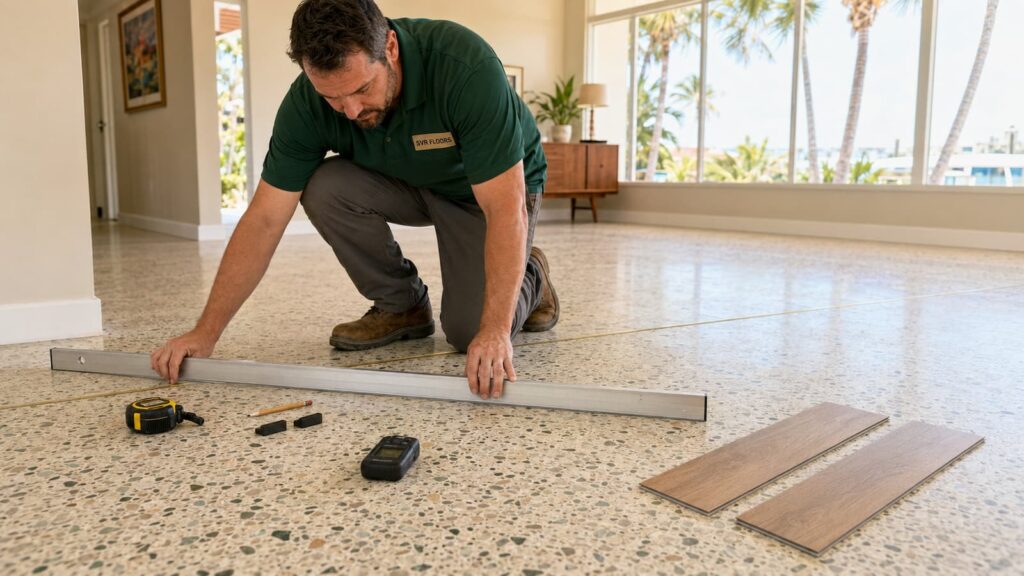
Checking floor flatness before installing LVP laminate or tile

How Flat Does a Floor Need to Be Before Installing LVP, Laminate, or Tile?

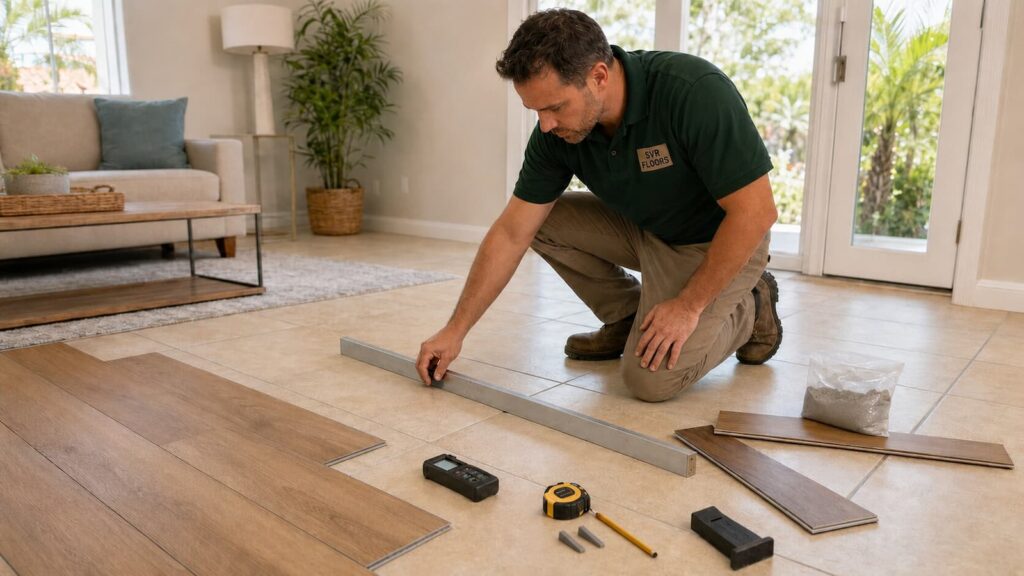
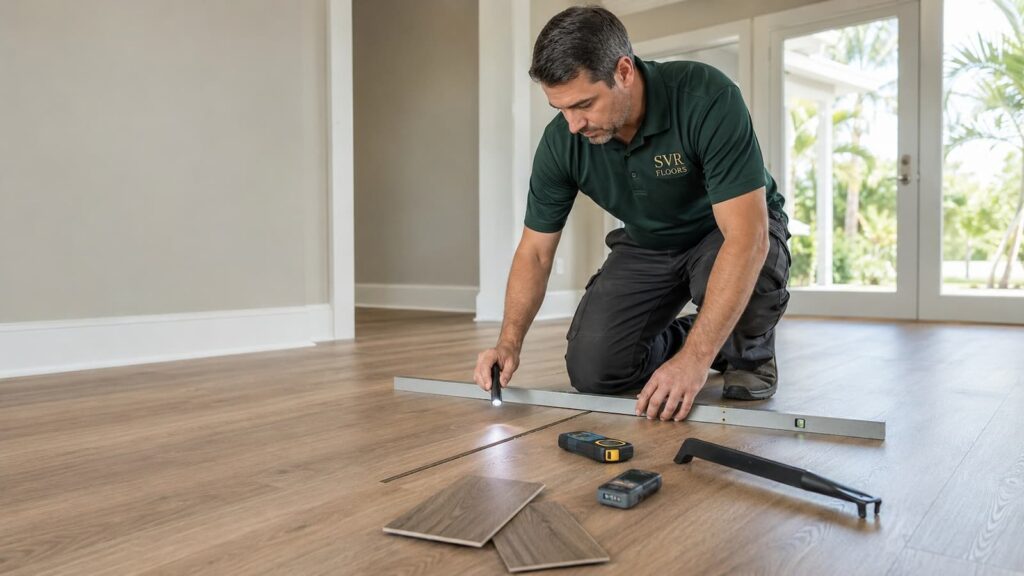
Before installing LVP, laminate, or tile, the floor underneath must be flat, stable, clean, and properly prepared. “Flat” does not always mean perfectly level, but dips, humps, ridges, low spots, soft areas, and uneven transitions can cause serious flooring problems. LVP and laminate can flex, click, gap, or separate over uneven areas, while tile can crack, loosen, or show lippage. This guide explains how flat a floor needs to be, why different materials have different tolerances, and when floor leveling or subfloor repair is needed before installation.

How Flat Does a Floor Need to Be Before Installing LVP, Laminate, or Tile? Read More »

Moisture barrier under vinyl plank flooring on concrete slab

Do You Need a Moisture Barrier Under Vinyl Plank Flooring on Concrete?

A moisture barrier may be needed under vinyl plank flooring on concrete, but the answer depends on the LVP product, installation method, slab moisture conditions, and manufacturer requirements. Waterproof vinyl plank does not automatically mean the entire flooring system is protected from moisture. Concrete can release moisture vapor, and trapped moisture can affect underlayment, adhesive, baseboards, odors, and long-term performance. This guide explains when a vapor barrier is required, when it may not be needed, and what homeowners should check before installing LVP over concrete.

Do You Need a Moisture Barrier Under Vinyl Plank Flooring on Concrete? Read More »

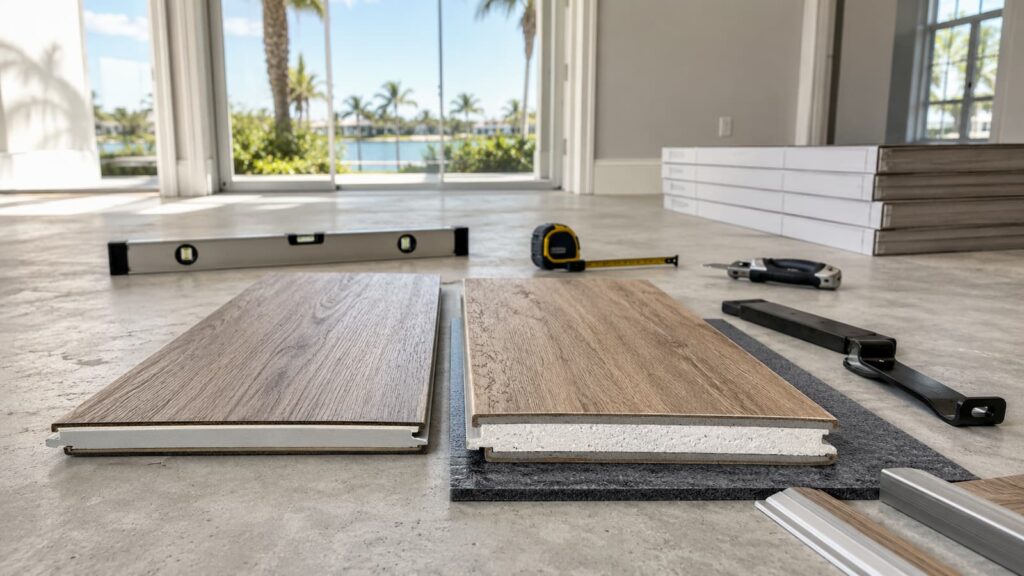
SPC vs WPC vinyl plank flooring comparison before installation

SPC vs WPC Vinyl Plank Flooring: What Homeowners Should Know Before Installation

SPC and WPC vinyl plank flooring are both popular rigid-core LVP options, but they feel and perform differently. SPC is usually denser, firmer, and more dent-resistant, while WPC is often softer, warmer, and more comfortable underfoot. For Florida homes, the best choice depends on the room, concrete slab condition, moisture risk, pets, traffic, comfort expectations, and installation quality. This guide explains what homeowners should know before choosing SPC or WPC vinyl plank flooring.

SPC vs WPC Vinyl Plank Flooring: What Homeowners Should Know Before Installation Read More »

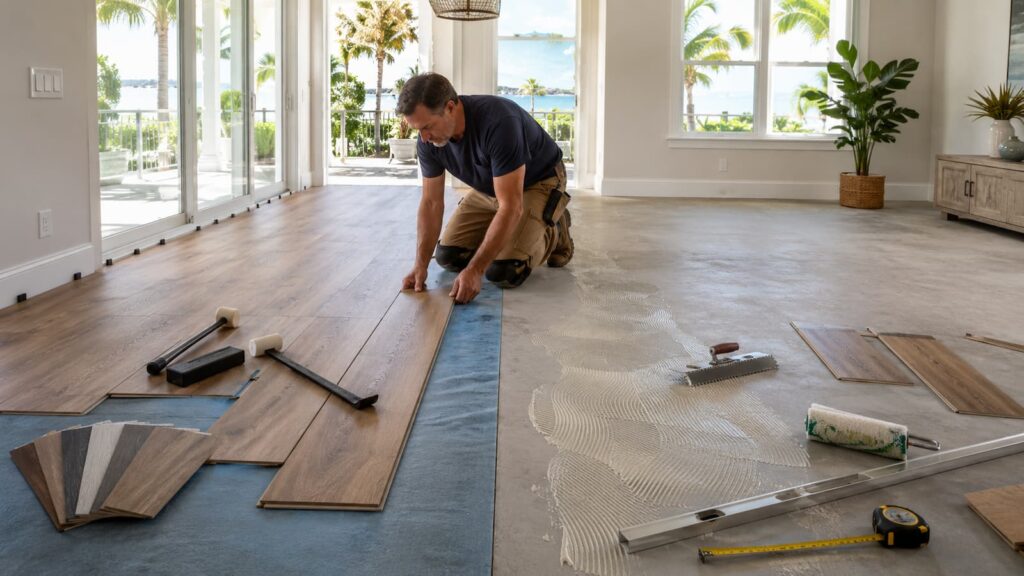
Floating vs glue-down vinyl plank flooring installation in a Florida home

Floating vs Glue-Down Vinyl Plank Flooring: Which Is Better for Florida Homes?

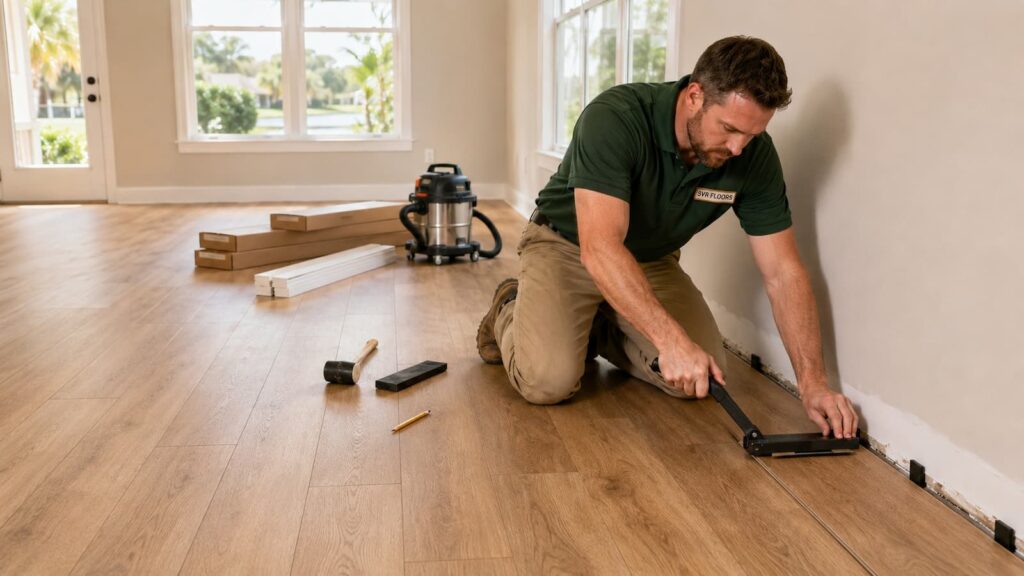
Floating and glue-down vinyl plank flooring can both work well in Florida homes, but they are not ideal for the same situations. Floating LVP is often the better choice for many residential living areas, bedrooms, and whole-home updates because it is efficient, comfortable, and easier to install over properly prepared concrete. Glue-down LVP can be better for certain high-traffic spaces, commercial-style use, large temperature swings, or areas where a lower-profile, firmly bonded floor is preferred. The best choice depends on slab condition, moisture risk, room use, product type, and installation quality.

Floating vs Glue-Down Vinyl Plank Flooring: Which Is Better for Florida Homes? Read More »

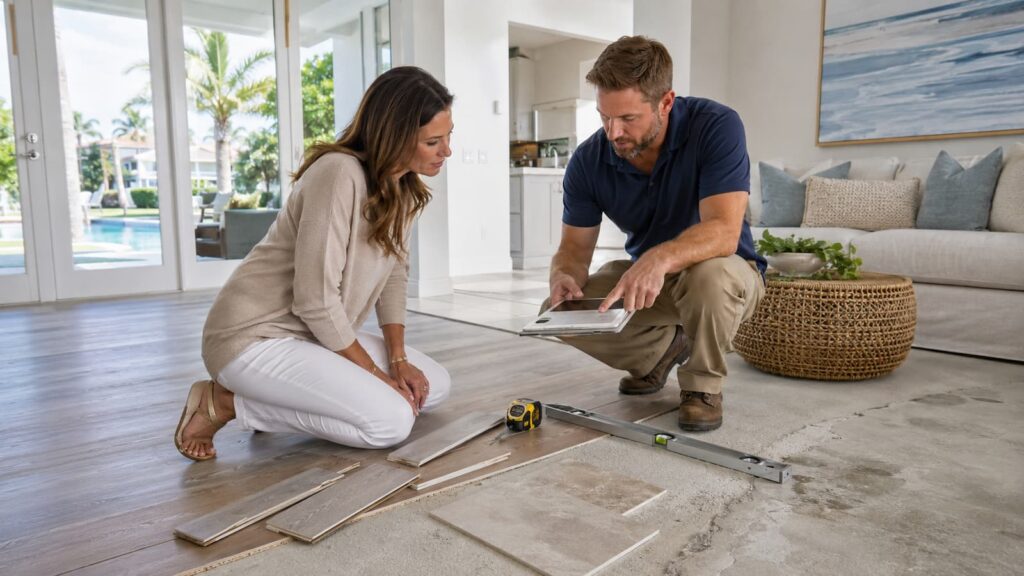
Homeowner asking a flooring contractor questions before installation

Questions to Ask a Flooring Contractor Before Hiring One

Hiring the right flooring contractor can protect your budget, your home, and the long-term performance of your new floor. Before you approve an estimate, ask about experience, insurance, project scope, floor preparation, moisture issues, leveling, subfloor repair, materials, warranties, cleanup, timelines, and how unexpected problems are handled. This guide explains the most important questions to ask before hiring a flooring contractor and what good answers should sound like.

Questions to Ask a Flooring Contractor Before Hiring One Read More »

Best flooring for rental property with luxury vinyl plank and tile options

What Type of Flooring Is Best for a Rental Property?

The best flooring for a rental property is durable, easy to clean, moisture-resistant, attractive to tenants, and practical to repair between turnovers. Luxury vinyl plank is often the best all-around choice for rental homes because it balances cost, comfort, water resistance, and modern appearance. Tile is excellent for bathrooms, laundry rooms, and wet areas, while laminate and hardwood should be used more selectively. This guide explains how to choose rental property flooring room by room and avoid costly mistakes.

What Type of Flooring Is Best for a Rental Property? Read More »

Water-damaged floor inspection before repair or replacement

Water-Damaged Floors: Repair or Replace? How to Decide

Water-damaged floors are not always a simple repair-or-replace decision. The right answer depends on the flooring material, how long the water was present, whether moisture reached the subfloor, and whether the source of the leak has been fixed. This guide explains how water affects LVP, laminate, tile, hardwood, and subfloors, when repair may be enough, when replacement is safer, and what homeowners should check before covering the problem with new flooring.

Water-Damaged Floors: Repair or Replace? How to Decide Read More »

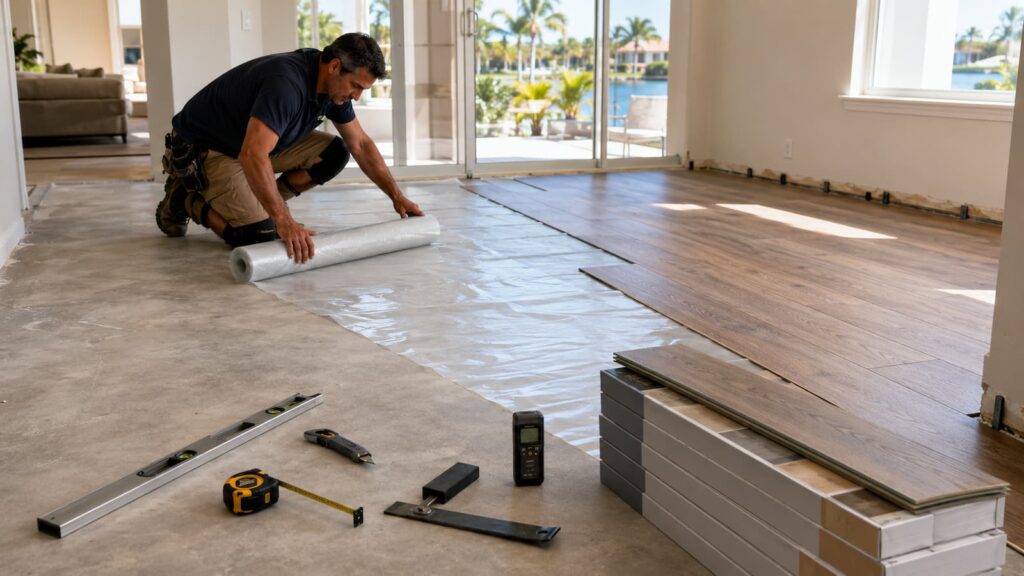
Vinyl plank flooring installation over concrete slab in a Florida home

Can You Install Vinyl Plank Flooring Over Concrete?

Yes, vinyl plank flooring can often be installed over concrete, but the slab must be clean, dry, flat, stable, and properly prepared. Concrete that looks solid may still have moisture, cracks, dips, old adhesive, high spots, or uneven transitions that can affect the finished floor. This guide explains what homeowners should know before installing LVP over concrete, including moisture testing, floor leveling, underlayment, floating vs glue-down installation, and when repairs are needed first.

Can You Install Vinyl Plank Flooring Over Concrete? Read More »

Subfloor repair before new flooring installation in a Florida home

Signs Your Subfloor Needs Repair Before New Flooring Installation

A beautiful new floor will only perform well if the surface underneath it is stable, dry, and properly prepared. Soft spots, squeaks, musty smells, uneven areas, cracked tile, water stains, and movement underfoot can all point to subfloor problems that should be fixed before new flooring is installed. This guide explains how to recognize subfloor damage, why it matters, and what homeowners should know before covering the problem with LVP, tile, laminate, or hardwood.

Signs Your Subfloor Needs Repair Before New Flooring Installation Read More »

Floor leveling before installing LVP or tile in a Florida home

Why Floor Leveling Matters Before Installing LVP or Tile

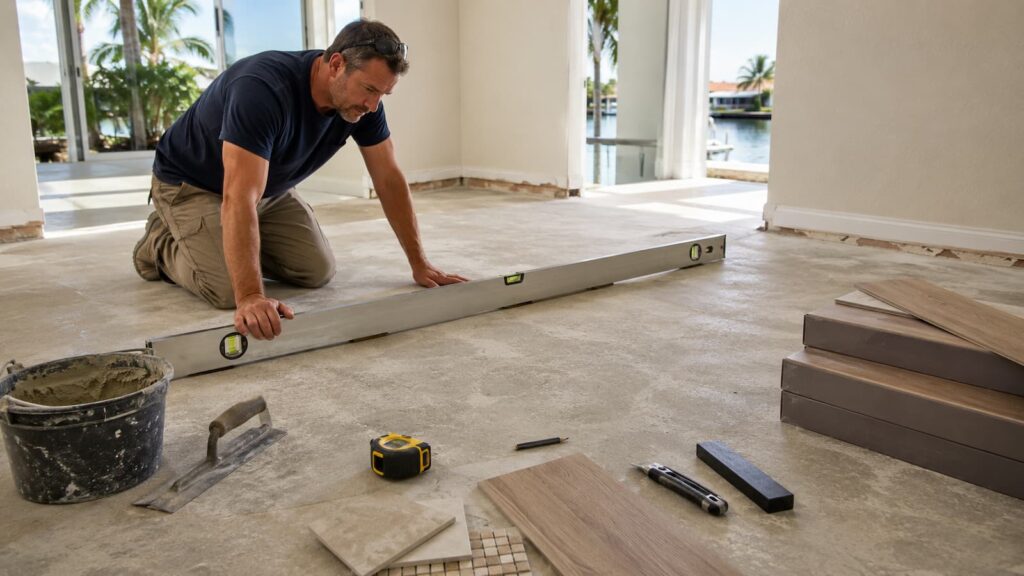
Floor leveling is one of the most important steps before installing luxury vinyl plank or tile, especially in homes with concrete slabs, older flooring, or previous water damage. Even a high-quality floor can fail if it is installed over dips, humps, cracks, or unstable areas. This guide explains why floor flatness matters, how uneven floors affect LVP and tile differently, when leveling is needed, and what homeowners should know before starting a flooring project.

Why Floor Leveling Matters Before Installing LVP or Tile Read More »