
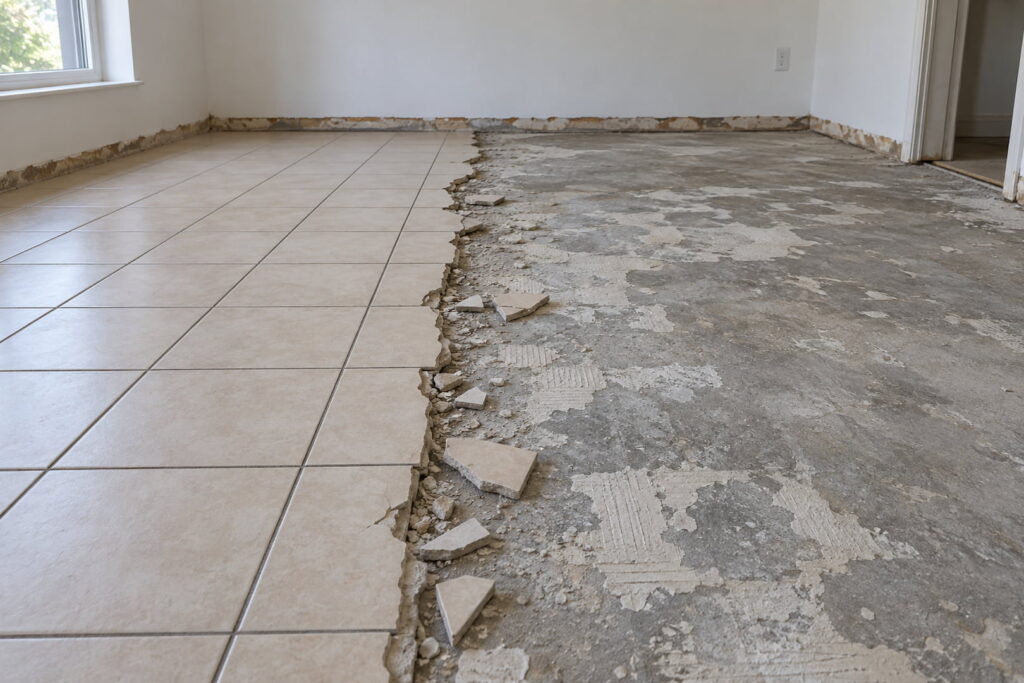
Tile removal belongs in your new-floor budget before you order the replacement material. As a starting reference, Homewyse lists a May 2026 national estimate of $3.05–$5.64 per square foot for basic tile removal. What matters next is the condition the contractor agrees to leave behind: tile gone, mortar removed, or a surface prepared for your chosen flooring.
The figures below are published market references checked in October 2026, not SVR Floors prices or a quote for a Largo or Pinellas County property. They help you compare the scope of estimates before committing to demolition.
How much does floor tile removal cost per square foot?
| Published reference | Cost per sq. ft. | Scope and location |
|---|---|---|
| Homewyse, May 2026 | $3.05–$5.64 | National basic tile removal estimate; tile and mortar detachment, removal from the home, legal disposal, protection and cleanup. |
| Remove Right, February 2026 | $2.50–$4.50 | Southwest Florida contractor guide: ceramic or porcelain over standard thinset, with hauling and disposal. |
| Remove Right, February 2026 | $4.00–$6.50+ | Same regional guide: ceramic or porcelain over a thick mortar bed, with hauling and disposal. |
Homewyse’s national calculator assumes favorable, readily serviceable conditions. Its exclusions include repairs, hazardous-material testing or remediation, general contractor markup, taxes on materials and supplies, and permit or inspection fees. The Remove Right guide covers Southwest Florida; its figures are not a Pinellas County survey. Neither reference sets the price for a particular home.
These are floor-removal figures. A shower tear-out that includes wall tile, waterproofing and plumbing access is a different scope. Replacing the floor also requires a separate budget for new materials and installation; the tile floor installation cost guide explains that portion.
Tile removal and thinset removal can be different line items
Thinset is the bonding mortar beneath the tile. Tile can come away while ridges or patches of that mortar remain attached to the substrate. A quote that covers lifting the tile and carrying out the debris may leave this residue for the next trade.
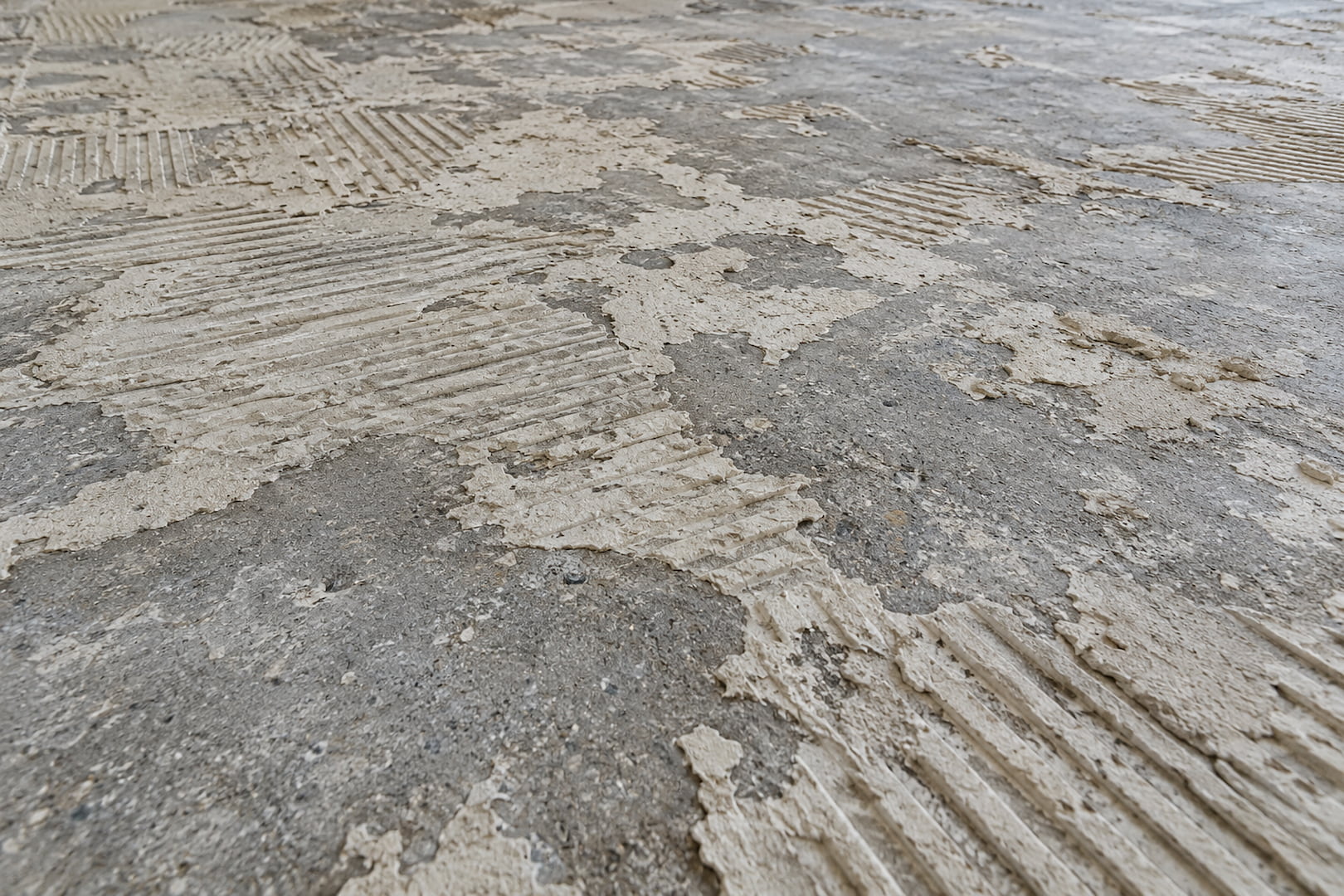
Before adding a mortar allowance, check whether the removal price already covers it. Homewyse’s basic description includes detaching mortar. Other contractors may separate tile lifting from the work needed to finish the exposed surface. Two line items should describe two different jobs.
A porcelain floor is not automatically the more expensive one to remove. The bond, mortar thickness, layers underneath and access to the edges all affect the work. A thick mortar bed is also a different assembly from a thin layer of bonding mortar. The estimate should identify which one the contractor expects to find.
A 300-square-foot budgeting example
Suppose you have 300 square feet of floor tile and use $4 per square foot as an illustrative removal allowance within the published ranges above:
- Tile removal with agreed hauling and disposal: 300 × $4 = $1,200.
- If separately required and excluded from that removal scope, light thinset finishing at an illustrative $1 per square foot: 300 × $1 = $300.
- Total for those two defined items: $1,500.
The optional $1 allowance falls within Remove Right’s published $0.75–$1.25 range for light thinset grinding. Do not add it if the removal quote already includes that work. This calculation is an example, not an SVR Floors estimate.
It leaves repairs, flattening, moisture-related work, furniture or appliance handling, and unusual access requirements unpriced. Obtain those amounts separately where needed. A low removal subtotal cannot tell you the complete replacement cost; use the flooring installation cost guide for Largo and Pinellas County to organize the rest of the budget.
Why the same square footage can cost more in another home
A clear ground-floor room and an occupied upstairs condo can have identical floor areas but different labor requirements. The second job may involve a longer carrying route, elevator reservations, restricted work hours or extra protection for shared hallways. Tell the estimator about these conditions before comparing prices.
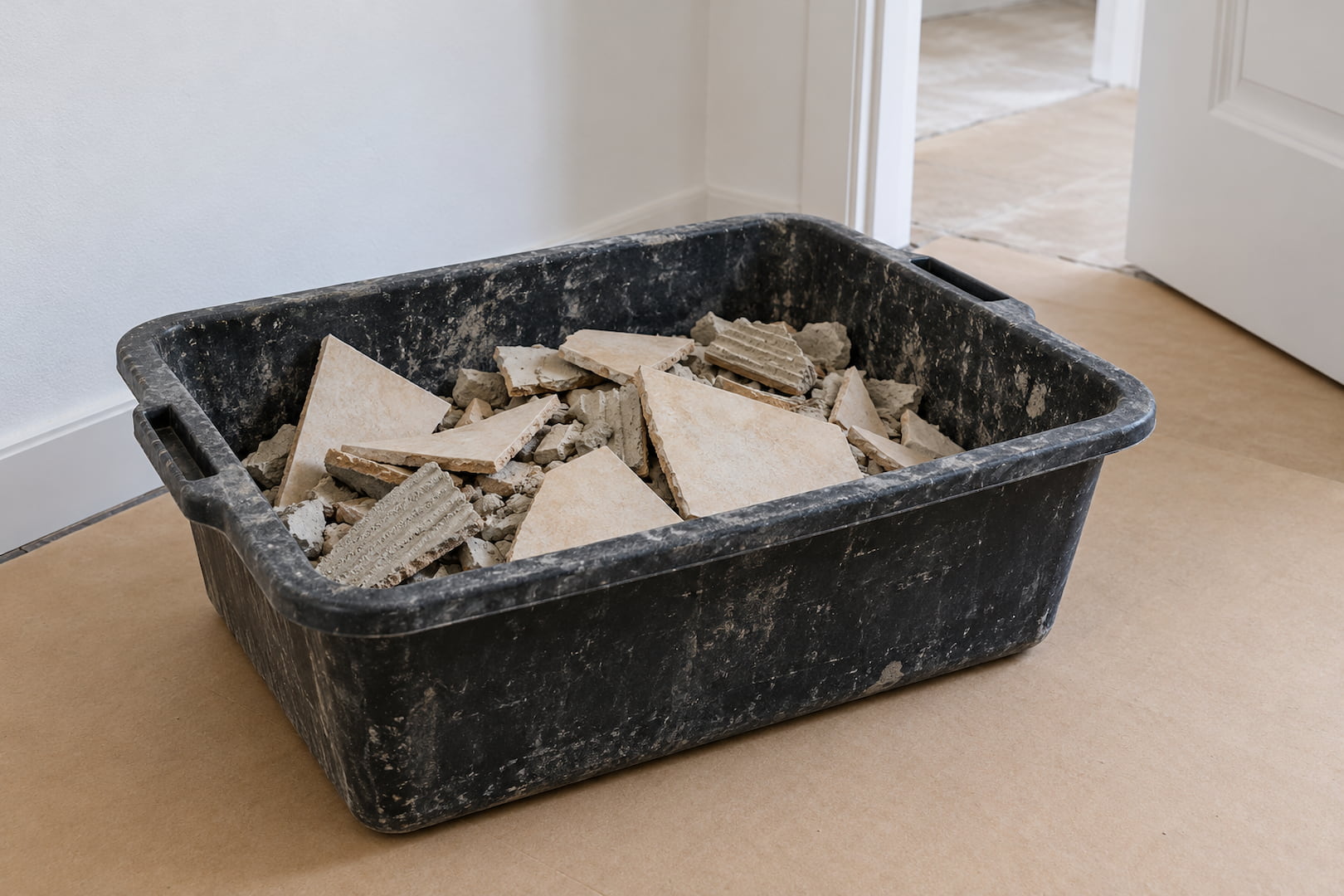
Who takes the broken tile away? Confirm who loads the debris, removes it from the property and pays disposal charges. “Debris collected” is incomplete if it means bags remain in your garage. A container, parking arrangement or building approval may need to be organized before work starts.
Small rooms do not always cost the advertised rate multiplied by their area. Mobilization, protection, setup and a disposal trip still take time. A contractor may apply a minimum job charge, so a small bathroom can have a higher effective cost per square foot than a larger open room. Ask for the job total and any minimum rather than assuming a published unit rate will apply.
What should “ready for new flooring” mean?
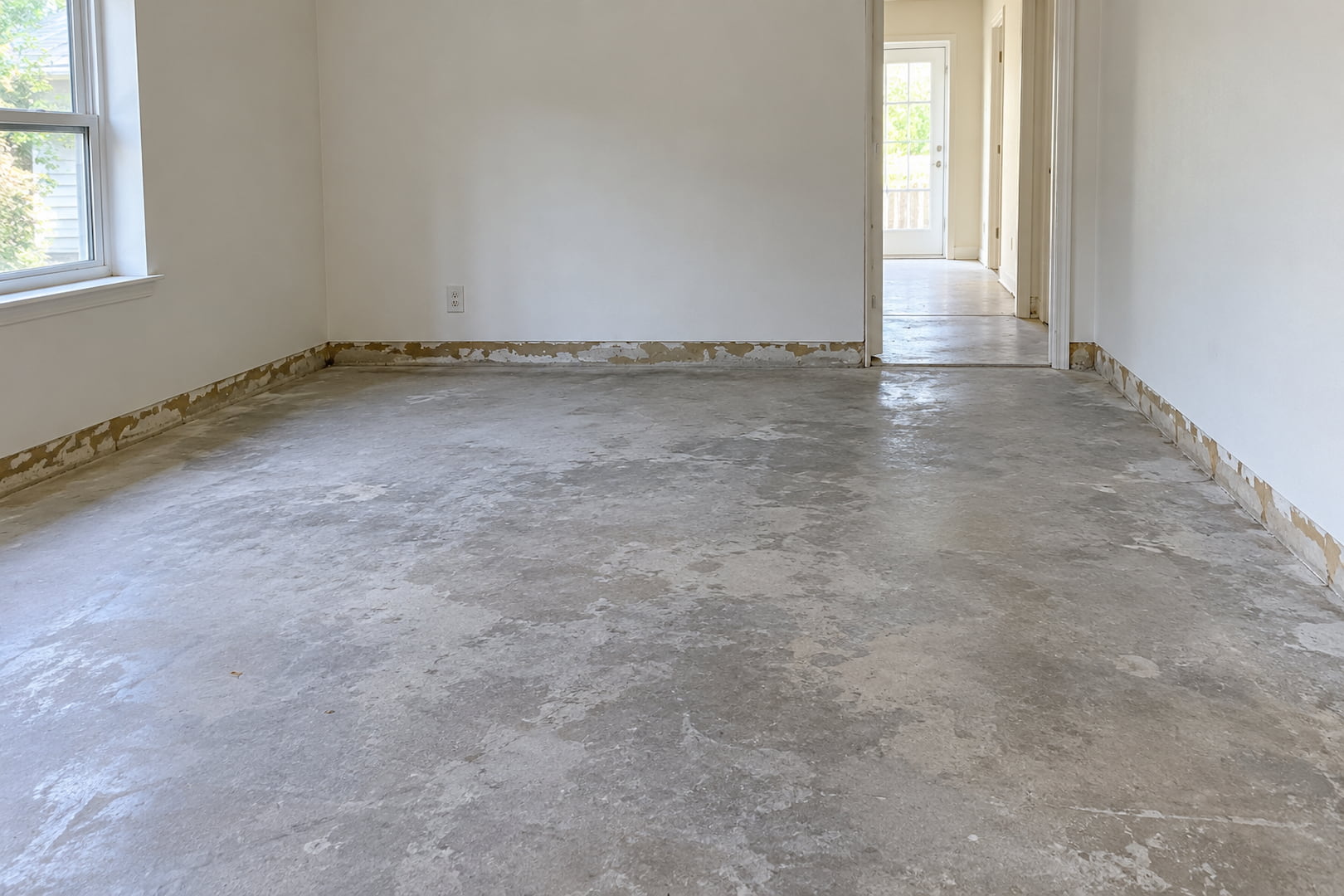
Once the tile is up, the installer can assess the surface underneath. Concrete may have high spots, depressions, cracks or damaged patches. A wood floor assembly can contain tile underlayment over plywood, and removing the upper layers may reveal weakened or damaged panels.
Minor surface repairs, replacement underlayment and structural subfloor repairs are different jobs. Agree on how the contractor will document unexpected conditions and obtain approval for extra work. The subfloor repair and replacement cost guide explains that separate part of the project.
Tell the removal contractor what is going down next: floating vinyl plank, glued wood and new tile can call for different preparation. The installer should assess flatness, moisture, surface soundness and any bond requirements against the relevant product instructions. A swept slab can still fail those checks. Flatness also differs from level: a surface may slope without having the abrupt dips or humps that cause problems for a particular floor.
Have the quote distinguish debris cleanup from residue removal, patching and floor flattening or leveling. If you are planning new tile installation, confirm who takes responsibility for accepting and preparing the exposed substrate before setting begins.
Dust control and older hidden materials
The written quote should explain dust control and cleanup. OSHA’s construction silica guidance identifies grinding and chipping among tasks that can expose workers to respirable crystalline silica and describes task-specific controls. Ask how the contractor will contain the work area, collect dust, restrict access and clean afterward. The term “dustless” should not be treated as a promise that no dust can escape.
Older, unidentified layers or adhesives beneath the visible tile need attention before disturbance. According to the EPA’s remodeling guidance, appearance alone cannot establish whether a material contains asbestos. When suspect material will be disturbed, EPA recommends sampling by a trained, accredited asbestos professional and analysis by a qualified laboratory. Any specialist assessment or required remediation needs its own scope; ordinary flooring demolition should not be assumed to include it.
Could covering the tile avoid removal costs?
Sometimes, but check the replacement product before keeping the tile. For example, COREtec Drop and Lock instructions allow installation over most existing hard-surface coverings when the surface is clean, flat, dry and structurally sound. That permission applies to the specified product, not every vinyl plank or flooring system.
The extra height still matters at doors, transitions and appliances. A new floor that blocks dishwasher removal can create a problem even when the tile underneath is suitable. Loose tile, moisture concerns or an unsuitable surface may also defeat the apparent saving. Our guide to installing LVP over existing tile covers those checks.
What to compare before accepting a removal quote
- The measured area and the layers included in removal.
- The treatment of thinset or mortar left behind.
- Hauling, disposal, protection and cleanup responsibilities.
- Access restrictions, furniture handling and any minimum charge.
- The condition promised at handoff and how extra repairs will be approved.
For a Largo or Pinellas County project, share the room measurements, existing tile photos, access details and planned replacement floor with SVR Floors when discussing old flooring removal and floor preparation. Those details help define a removal scope that fits the installation that follows.