
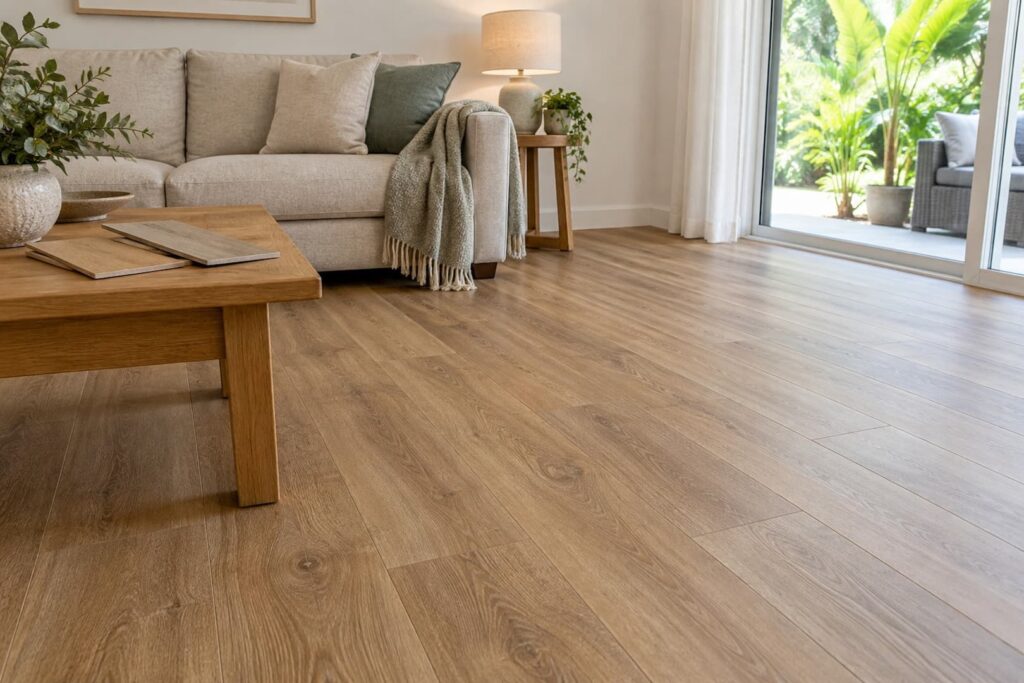
A 12 mil wear layer can suit a quieter household, while 20 mil is a sensible starting point for busy living areas, frequent guests and rental turnover. Both need a suitable finish, sound construction and proper installation. The larger number gives you more wear-layer material; it does not make the floor scratchproof or tell you how many years it will last.
Start with the rooms you use every day. A guest bedroom used a few weekends a year has different demands from the hallway between the front door, kitchen and patio. Compare those demands with the specifications for the exact plank before paying for an upgrade.
12 mil vs 20 mil: the practical difference
| What you are comparing | 12 mil wear layer | 20 mil wear layer |
|---|---|---|
| Thickness in inches | 0.012 inch | 0.020 inch |
| Thickness in millimeters | 0.3048 mm, commonly rounded to 0.3 mm | 0.508 mm, commonly rounded to 0.5 mm |
| Where to begin considering it | Bedrooms and lower-traffic residential rooms | Busy connected rooms, entrances and homes with frequent guests |
| Main reason to choose it | May meet the room’s needs at a lower material cost | More material above the printed design to allow for abrasion |
| What still needs checking | Finish, permitted use, installation requirements and warranty | The same checks; 20 mil alone does not establish commercial suitability |
Mil and millimeter are different units. One mil is one-thousandth of an inch. Flooring supplier Urban Surfaces explains the difference between mil and mm, including why the two measurements appear on the same specification sheet. A plank advertised as 6 mm thick with a 20 mil wear layer has a total thickness of 6 mm; the wear layer accounts for about half a millimeter of that.
The 20 mil layer is about 67% thicker than the 12 mil layer. That arithmetic describes thickness only. It cannot support a claim that the floor lasts 67% longer or resists every kind of damage 67% better.
Wear layer, surface finish and plank thickness do different jobs
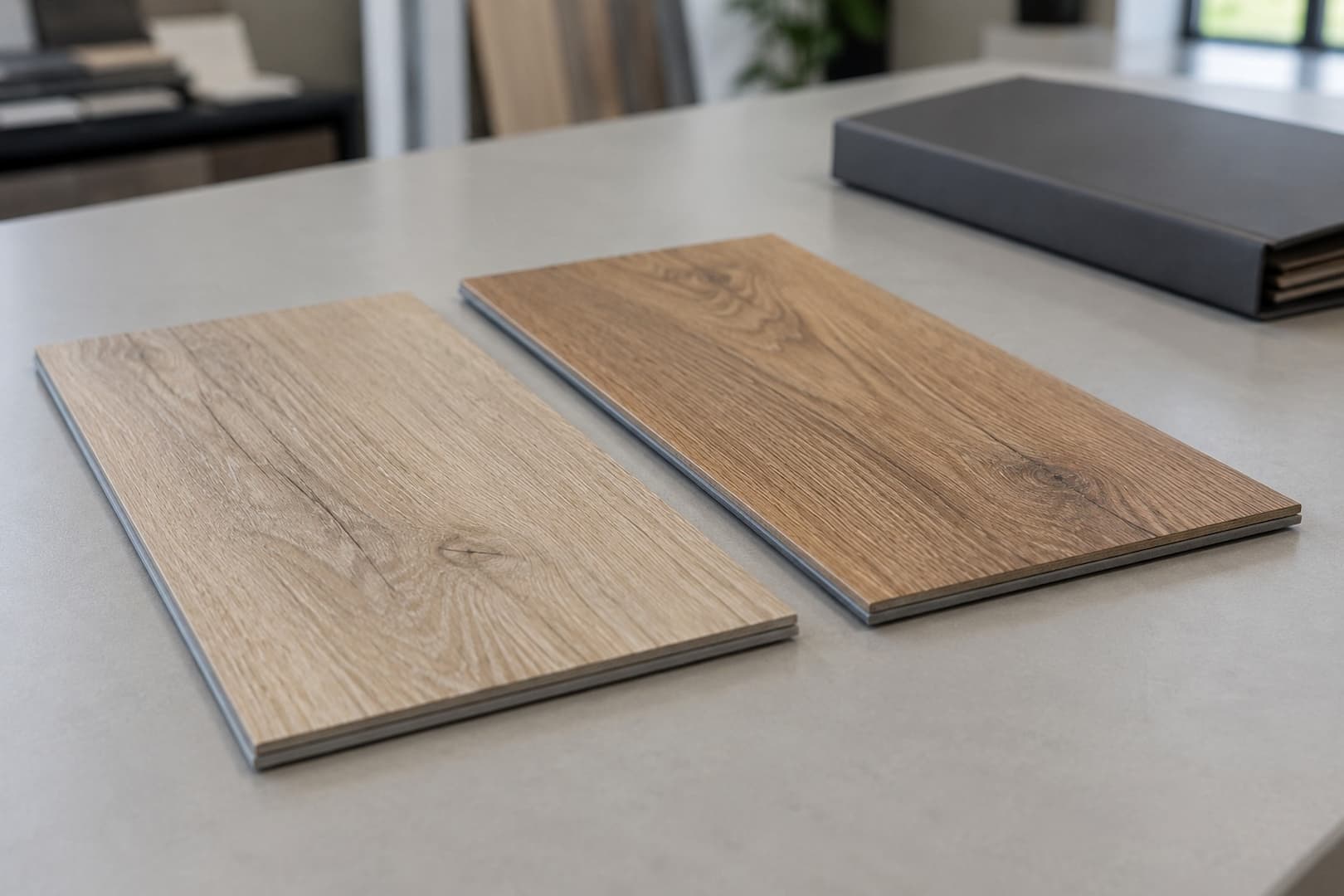
The clear wear layer sits above the printed wood or stone design. Above it, manufacturers may apply a protective surface treatment. Under the design are the layers that give the plank its structure, and sometimes an attached pad. Karndean’s floor construction explanation separates its surface coating, clear PVC wear layer, design and supporting layers.
Read those specifications separately when comparing samples. The mil number describes a thickness. The finish influences how the surface handles marks and cleaning, while the core and backing affect how the plank feels and responds to loads. A thicker overall plank does not necessarily have a thicker wear layer. Nor does a 20 mil specification reveal the quality of its locking joints.
If two products have different cores as well as different wear layers, you are making more than one choice. Our guide to SPC vs WPC vinyl plank flooring covers the separate questions of firmness, comfort and core construction.
When 12 mil can be enough
A 12 mil product deserves consideration for a guest room, a lightly used bedroom or a living room with modest foot traffic. Look for a manufacturer that approves the product for your intended residential use, provides clear installation instructions and explains its warranty.
Do not judge use by room name alone. A bedroom can double as a home office where a chair rolls across the same spot for hours. A small living room may be the route everyone takes to reach the kitchen. Those concentrated patterns deserve more attention than the square footage.
For a limited budget, it can make sense to choose an appropriate 12 mil floor and fully fund the required preparation. A 20 mil plank does not compensate for an uneven surface beneath it. If the estimate includes corrections, ask the installer to explain which are necessary for the selected product before reallocating that money to a thicker wear layer.
When the upgrade to 20 mil is easier to justify
For a busy whole-home installation, 20 mil is a reasonable place to begin your shortlist. Repeated trips between the entrance, kitchen and living area put traffic into the same paths. More material above the printed design may be worth paying for when those paths cross several connected rooms.
Homes with dogs and children
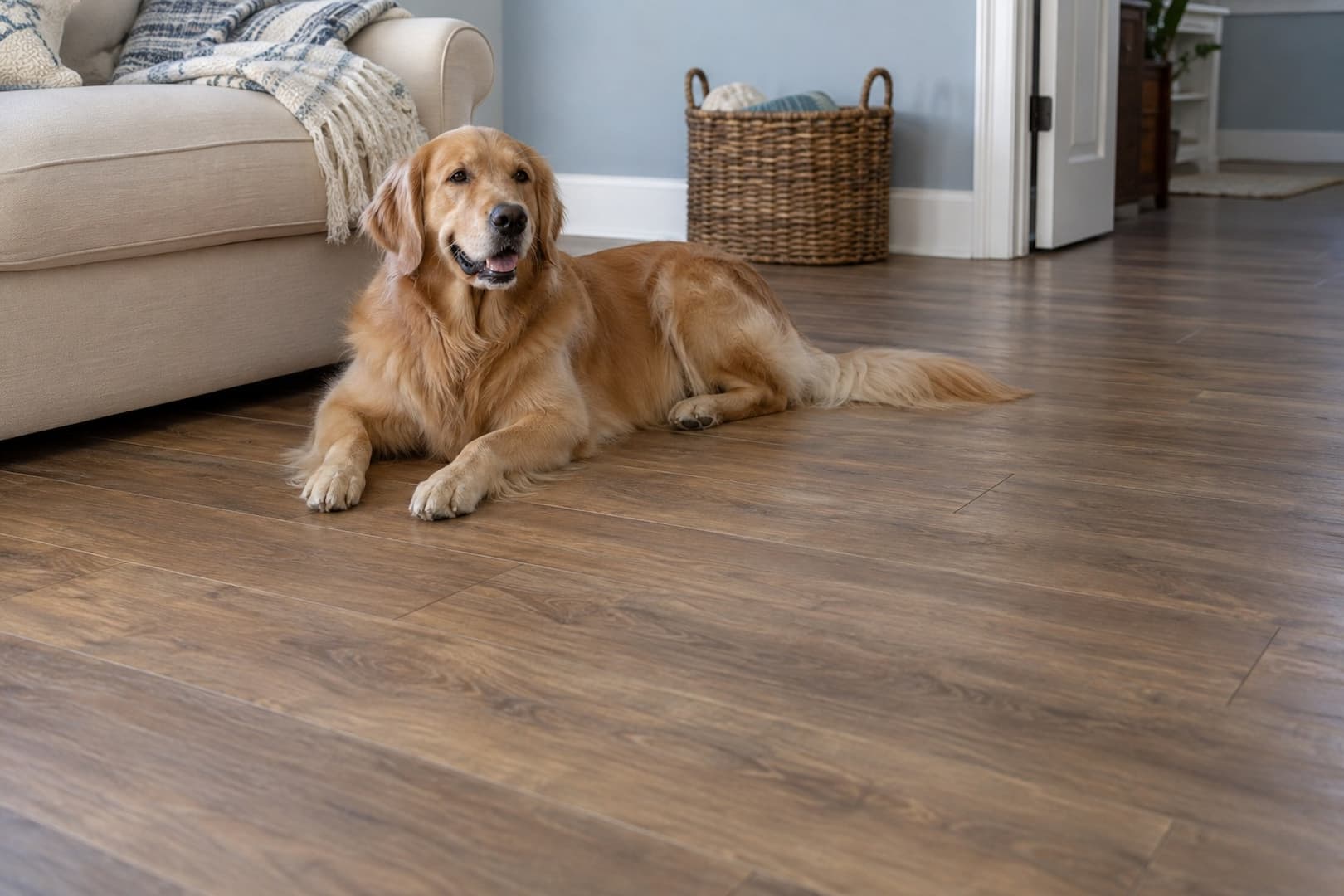
More activity can favor a thicker wear layer, but owning a dog does not automatically disqualify every 12 mil floor. Compare the product’s scratch-resistance claims and pet warranty alongside its mil rating. Protection against pet stains is a different promise from protection against claw marks. The dog’s activity, tracked-in grit and furniture movement all matter.
Rentals and vacation properties
Rental owners have less control over shoes, luggage, cleaning products and how often furniture moves. That makes a documented, suitable 20 mil product worth comparing early. Ask the manufacturer how it classifies your property: owner-occupied residential, long-term rental and short-term accommodation may have different coverage. A residential warranty heading does not answer that question by itself.
Ask how the installer would replace a damaged plank and whether matching material is available. Keep spare planks from the original purchase. An isolated gouge can spoil a floor that has very little general wear, even if you chose a thicker wear layer.
Does 20 mil scratch less than 12 mil?
You cannot reliably rank two floors for scratching from wear-layer thickness alone. Abrasion gradually removes material through repeated contact. A scratch is a localized surface mark or cut; an indentation involves compression under a load. Each raises a different product question.
Compare the finish and the manufacturer’s stated performance for the exact product. Ask separately about scratches, dents and rolling chairs. If a salesperson uses “commercial grade” to describe a floor, request the document that identifies its approved applications and exclusions.
The Mannington ADURA Max warranty illustrates why the wording matters. It defines wear-out as loss of the wear layer that changes the printed pattern, while listing scuffs, scratches and cuts among its exclusions. Check the current warranty supplied with your chosen floor; other collections can have different coverage.
A lifetime wear warranty therefore should not be read as a promise of a lifetime without visible marks. Before buying, find out what qualifies as a covered defect, who can make a claim and whether labor is included. Keep the receipt, product number and installation documents together.
Florida sand, sun and moisture need separate answers
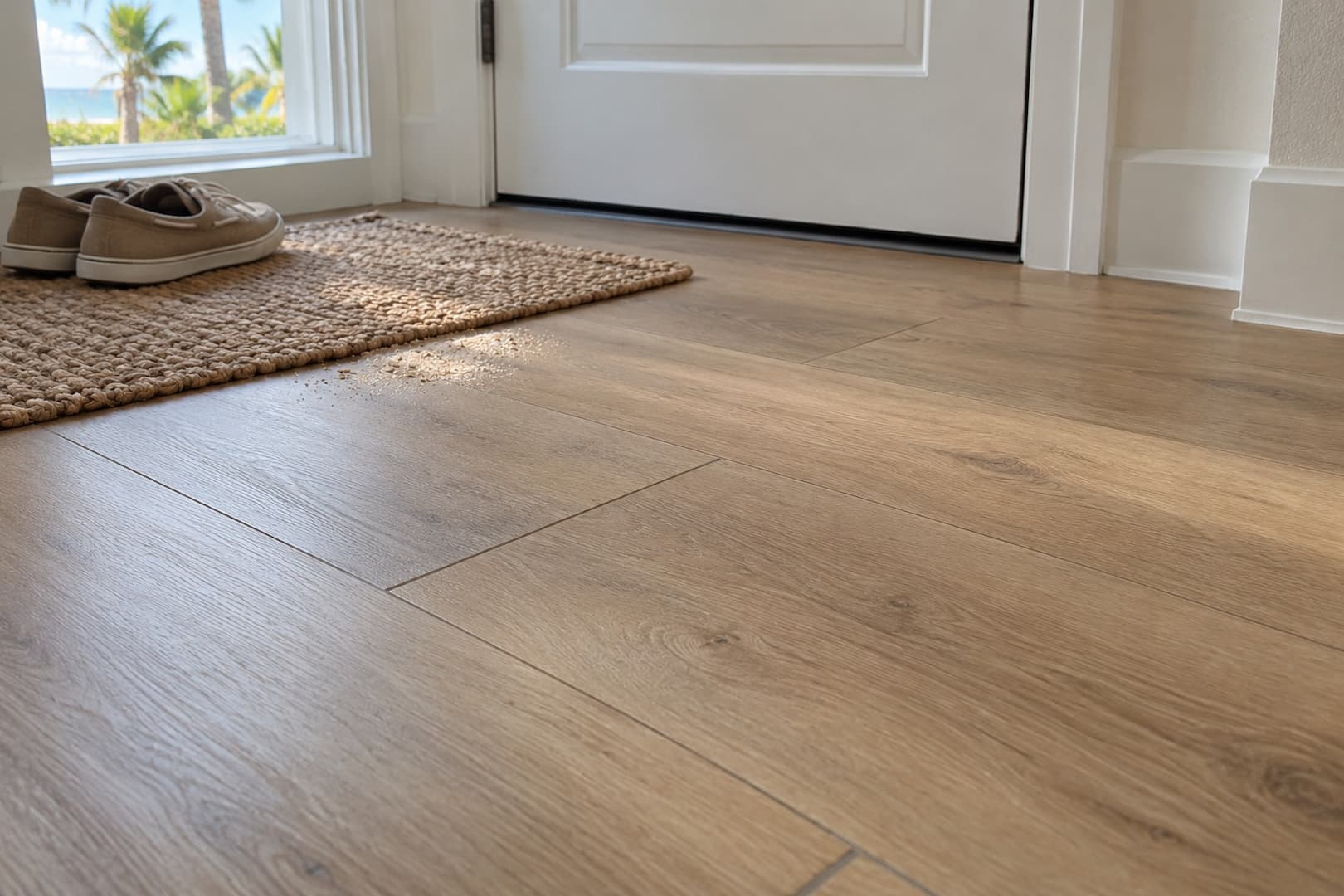
In a coastal home, consider where grit enters. The patio door used after gardening may need as much attention as the front entrance after a beach trip. A thicker wear layer can provide more material against abrasion, but the practical first step is to keep sand from circulating through the house.
Sunlight and moisture are different issues. A wear-layer rating does not specify the product’s allowed temperature range, resistance to fading or suitability for an enclosed porch. Check those conditions before extending an interior floor into a space that gets hot or lacks regular climate control.
Likewise, a waterproof plank is not a solution for a damp slab or a leak. Have the installer check the substrate and follow the selected flooring system’s moisture requirements. Where high spots or dips need correction, floor leveling and preparation belongs in the scope before installation starts. Wear-layer thickness cannot resolve those conditions.
How to decide whether the price difference is worth it
Ask for two itemized estimates based on the same measured area. Compare material, waste allowance, removal, preparation, installation and trim. Different installation systems or transitions can change the final price gap, even when the advertised prices per square foot are close.
For the material upgrade alone, multiply the per-square-foot difference by the quantity you will actually purchase, including the agreed waste allowance. Then consider whether the extra cost buys anything else you value: a preferred finish, better-looking samples, useful warranty terms or easier access to replacement planks.
For a quiet guest room, 20 mil may add little practical value relative to its cost. For a connected main floor used heavily every day, the upgrade may be easier to justify. Compare suitable products first; a bargain loses its appeal if the manufacturer does not approve it for the room or use you have in mind.
Protect either wear layer where the floor works hardest
Shaw’s luxury vinyl care guidance emphasizes grit removal, suitable entrance mats and furniture protectors. Follow the care sheet for your floor, including its cleaner and mat-backing requirements.
- Clean entrances and traffic paths often enough that loose grit does not build up.
- Use non-staining mats compatible with the flooring, and clean underneath them.
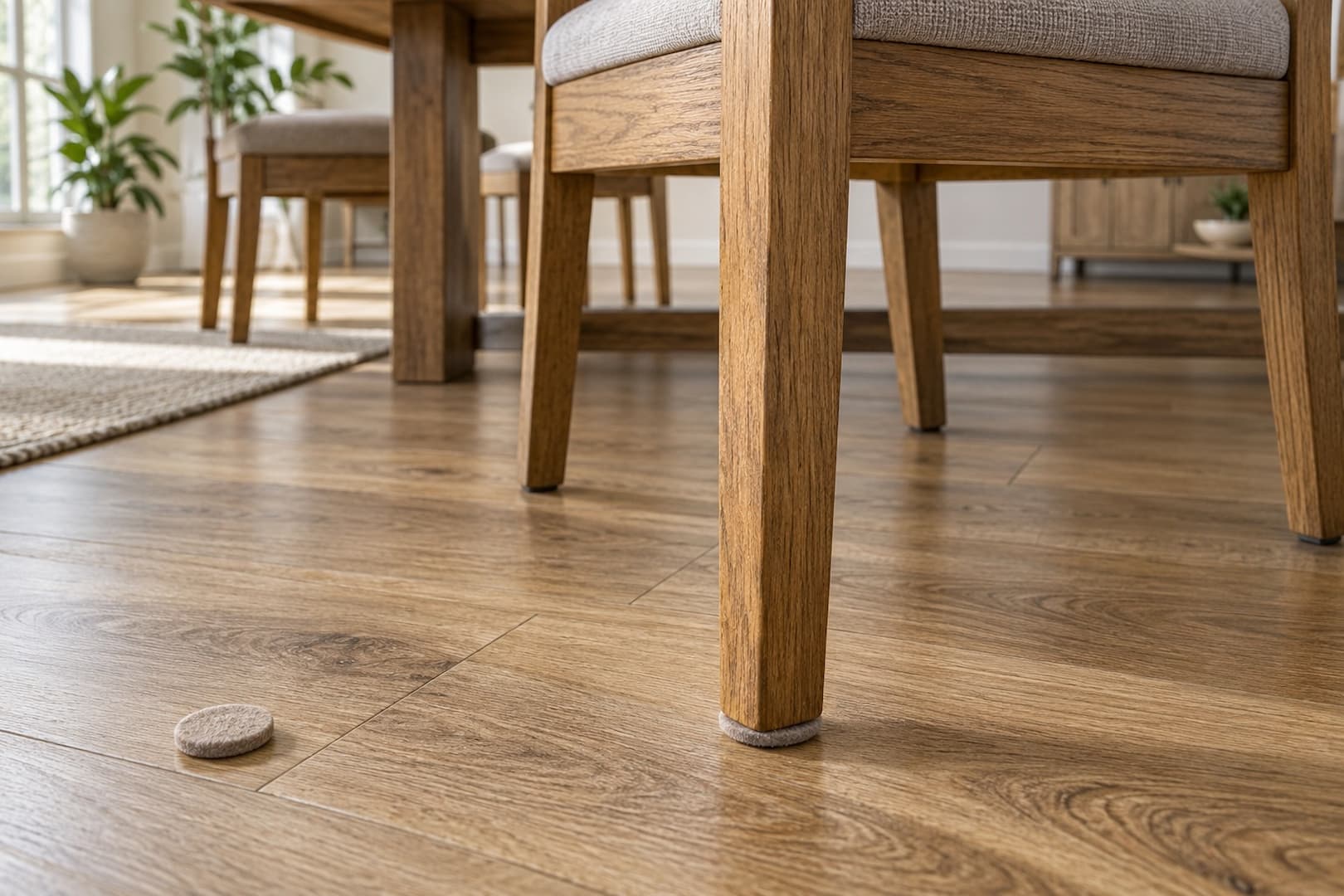
- Fit suitable pads under chair legs and check them for trapped dirt or worn edges.
- Check the rules for rolling chairs, including any required hard-floor chair mat or approved casters.
- Plan protection before moving appliances or heavy furniture across the finished floor.
Questions to settle before ordering
How long will 12 mil or 20 mil vinyl flooring last?
Neither number gives a dependable lifespan on its own. Traffic, grit, finish, installation and maintenance affect the result. Ask about warranty coverage, but avoid converting the warranty term into an expected replacement date.
Is a 20 mil floor always thicker overall?
No. Check the separate entries for total plank thickness and wear-layer thickness. The attached pad may also be included in the advertised overall measurement, so confirm what that number covers when comparing floor heights.
Should I mix 12 mil bedrooms with 20 mil living areas?
That can work as a planned room-by-room design, but similar colors do not guarantee matching sheen, height or joints. Do not assume different products can click together. Ask the installer about transitions and whether the savings justify the extra planning.
Can vinyl’s wear layer be sanded and refinished?
It is not a sandable hardwood surface. Sanding can damage the finish and printed design. Follow the manufacturer’s care and repair instructions; a damaged plank may need replacement.
Bring the specifications to your installation estimate
SVR FLOORS can review your rooms, existing floor and preparation needs as part of vinyl plank installation in Largo and nearby Tampa Bay communities. Have the product names and specification sheets ready, along with any concerns about pets, sandy entrances or rental use. The estimate can then account for the floor you want and the preparation it needs.