

For an initial flooring budget in Largo or Pinellas County, published national guides put LVP at $4–$16 per square foot installed, laminate at $4–$14, engineered wood at $7–$20, and solid hardwood at $11–$25. A separate floor-tile guide gives a broader $12–$50 range. These are reference ranges for materials and installation labor, not measured local averages or SVR FLOORS rates. The floor already in your home can change the final bill substantially.
Before multiplying a rate by your room size, check what that rate buys. Does it include the flooring purchase, removal, surface preparation, transitions, and moving the refrigerator? Those details turn a broad material comparison into a budget for the rooms you actually want to update.
Flooring installation cost by material
The figures below were checked on October 24, 2026. The LVP, laminate, and wood ranges come from HomeGuide’s national flooring guide; the tile range comes from its more specific floor-tile installation guide. The 500-square-foot column is simple multiplication, not a separate quote.
| Flooring | Materials and installation labor, per sq. ft. | 500 sq. ft. at that range |
|---|---|---|
| Luxury vinyl plank | $4–$16 | $2,000–$8,000 |
| Laminate | $4–$14 | $2,000–$7,000 |
| Engineered wood | $7–$20 | $3,500–$10,000 |
| Solid hardwood | $11–$25 | $5,500–$12,500 |
| Floor tile | $12–$50 | $6,000–$25,000 |
These ranges span different products and installation conditions. They do not establish that every project includes demolition, structural repair, extensive flattening, moisture treatment, acoustic upgrades, trim, delivery, or tax. Confirm those items in the estimate. Do not add a second labor charge to an installed price that already includes the same work.
Choose a material before comparing installation rates
Start with a product or a short list of specific products, rather than a color description alone. The installation method, supporting layers, and finishing details can differ between floors that look similar. A lower shelf price does not necessarily produce a lower completed project price.
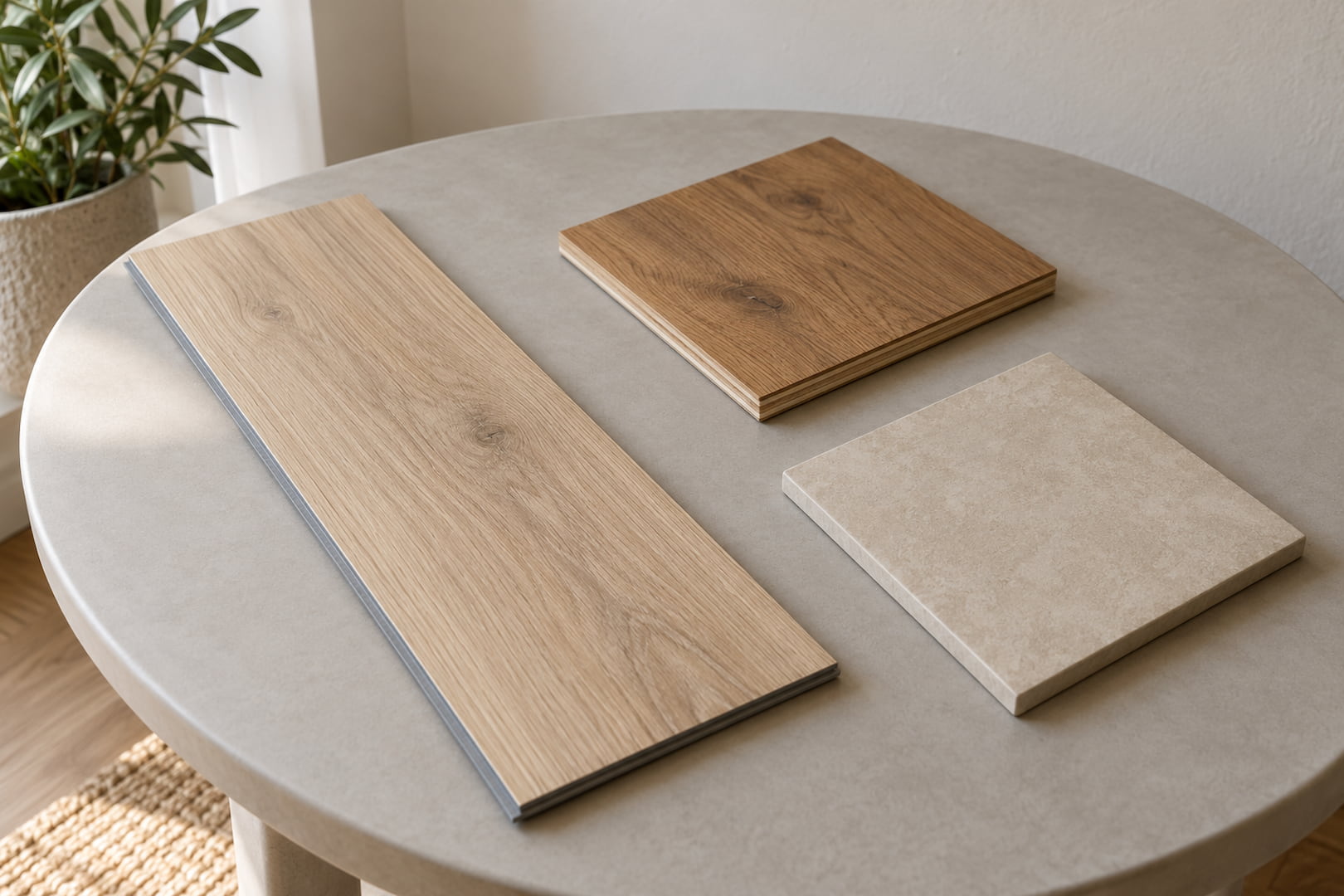
LVP and laminate: identify whether the selected floor floats or uses an approved adhesive installation. Confirm what is supplied with the boards and what the installation requires beneath them. Our vinyl plank installation cost guide provides the more detailed LVP breakdown.
Engineered and solid wood: have the installer evaluate the proposed system over your existing base. Do not assume that every engineered board can float or that a nail-down method can fasten directly into bare concrete. Extra substrate layers, specified adhesives, conditioning, and finish work can affect the comparison.
Tile: specify the size, pattern, grout, and edge details before comparing rates. A straight layout with ordinary cuts is different from a border, mosaic, or pattern that crosses several rooms. The tile floor installation cost guide separates the tile purchase, setting labor, supplies, and additional preparation.
Installation, replacement, and labor-only quotes are different
An installation quote can start with an empty room and an exposed, suitable base. A replacement project starts with the floor you already have. It may also require moving furniture, removing old materials, dealing with the residue underneath, and restoring the room afterward.
With a labor-only proposal, ask who supplies each material. Flooring boards or tile may be yours to purchase, while adhesive, grout, underlayment, trims, or consumables may or may not be included in the installer’s price. Delivery, extra cartons, returns, and material defects also need an agreed owner.
Keep the quantities separate. The finished floor area, purchased material quantity, and area needing repair may all differ. Cuts and spare pieces can increase the order, but that does not automatically mean labor is billed on every square foot in the delivered cartons. Ask which quantity each line uses.
A 500-square-foot planning example
Suppose a 500-square-foot project uses an assumed combined material-and-installation allowance of $8 per square foot. That creates a $4,000 starting amount. The following figures are hypothetical budget inputs chosen to show the arithmetic; they are not advertised local prices or a completed SVR FLOORS project.
| Assumed scope | Calculation | Planning amount |
|---|---|---|
| New flooring and installation labor | 500 sq. ft. × $8, including the assumed material order allowance | $4,000 |
| Remove and dispose of the existing floor | Separate assumed fixed allowance | $900 |
| Identified preparation outside the installation allowance | Separate assumed fixed allowance | $600 |
| Transitions and trim | Separate assumed fixed allowance | $250 |
| Illustrative subtotal | $4,000 + $900 + $600 + $250 | $5,750 |
The result is $11.50 per square foot of finished floor, although the starting allowance was $8. That difference comes from the assumed additional scope. This example excludes tax, delivery, furniture and appliance handling, structural repairs, special moisture or acoustic systems, and any other work not listed. It is not a complete budget for a room that needs those items.
Check for overlap before adding these lines. If the $8 installation allowance already includes the same preparation or trim, remove that work from the separate allowance. Otherwise, the total counts it twice.
The existing floor can change the budget most
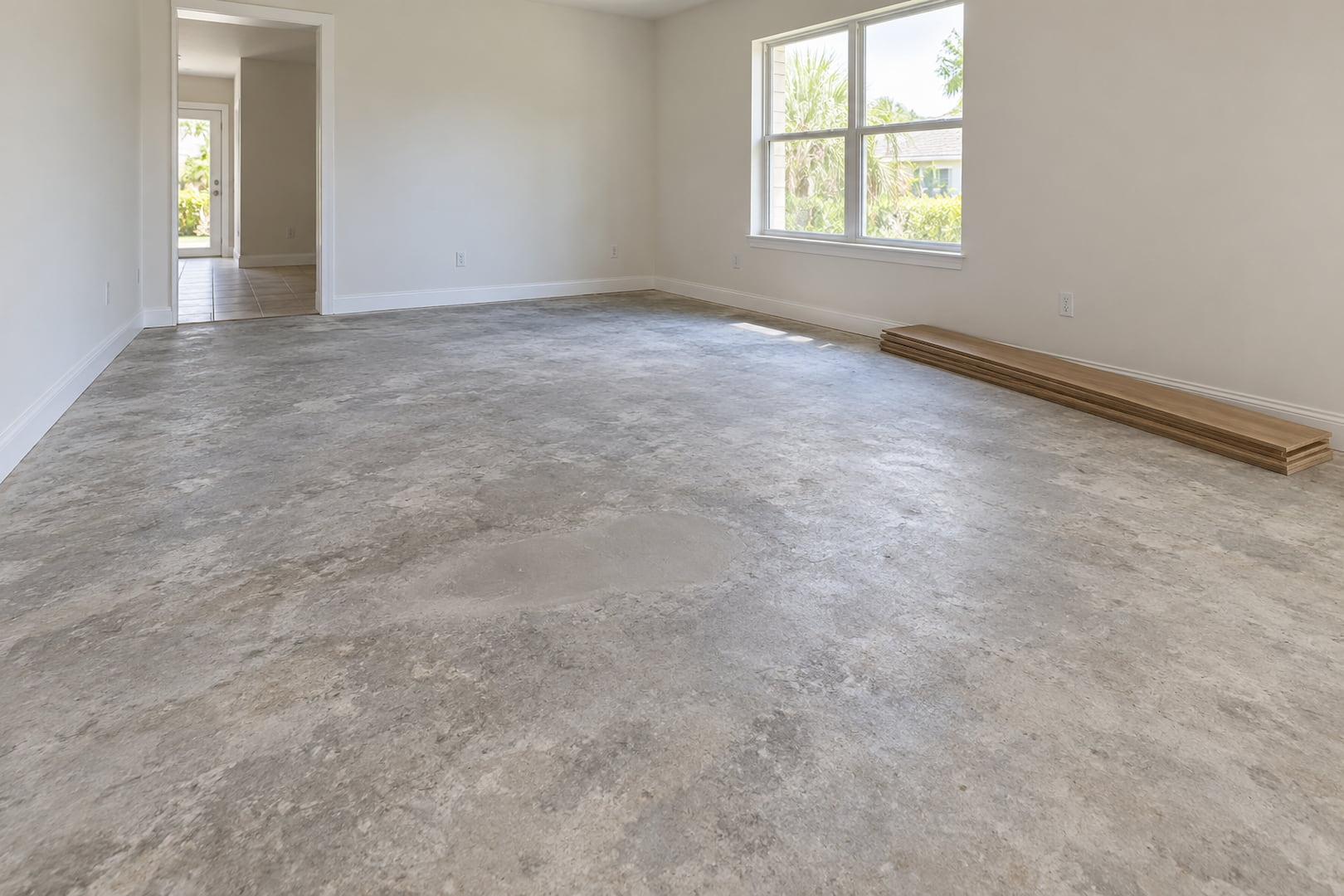
Before comparing finish materials, establish what must happen underneath them. Tile bonded to a slab, a floating floor that can be lifted, and a glued floor that leaves residue create different removal jobs. Ask where the demolition contractor’s scope stops: debris cleared, adhesive removed, or a base prepared for a named new flooring system.
The tile removal cost guide covers demolition and the distinction between removing tile and preparing the exposed surface. A quote that includes tile and mortar removal should not automatically receive another full charge for the same mortar removal.
After removal, surface correction and structural repair are different decisions. A dip in an otherwise sound slab is not the same problem as a weakened wood panel. If damaged sections need replacement, use the subfloor repair and replacement cost guide to separate that work from the finish floor.
For wood over concrete, the National Wood Flooring Association’s concrete guidance calls for suitable preparation and moisture testing, with the flooring and adhesive instructions controlling the system. A slab’s appearance alone cannot establish the required treatment. Ask what has been assessed and what remains provisional until the base is exposed.
What matters for a Largo or Pinellas County estimate?
A vacant ground-floor home in Largo and an occupied condo in Clearwater may have the same measured area and very different access. Tell the installer where materials can be unloaded, which floor the unit is on, and whether furniture will remain inside. The address alone leaves those details unanswered.
For a condo, get the association’s written flooring requirements before buying underlayment. Sound performance concerns a complete floor-ceiling assembly; Maxxon’s system selector, for example, evaluates different assemblies and notes the effect of project variables. An underlayment’s headline rating is not automatic approval for your building. Our Florida condo flooring guide explains the information to collect.
Ask about permitted working hours, elevator reservations, delivery access, and debris routes. Restrictions can change how much work a crew can complete in a visit. Keep building fees or deposits separate from the contractor’s installation charge, and establish whether a deposit is refundable.
If you are staying in the home, decide where the sofa and beds will go while each room is worked on. Keep a route to the rooms you still need. Splitting the installation into stages can mean moving furniture more than once or bringing the crew back. Product conditioning and cure requirements also affect when a room can be used again.
Where can you reduce cost without leaving out necessary work?
Compare products that suit the same room and installation conditions. Simplifying a pattern, reducing unnecessary material changes between rooms, or choosing a less costly compatible finish can reduce part of the budget. Ask the installer to price those changes individually so the savings are visible.
Self-managing furniture moves may help if the contractor agrees and the rooms are genuinely ready on the scheduled date. Buying your own material also changes responsibilities: confirm quantity, batch consistency, delivery timing, return terms, and who pays for delays caused by a shortage.
Do not reduce the estimate by omitting a known substrate problem. The practical comparison is between two complete scopes that can support the chosen floor. A lower price that leaves required preparation unresolved has not established a cheaper completed installation.
Questions to resolve before accepting a quote
- What exact flooring product, quantity, and installation method does the price cover?
- Are removal, disposal, preparation, moisture checks, and required supporting layers included?
- Which trim, transitions, appliance moves, and furniture moves are priced?
- What remains an allowance, and how will additional findings be documented and approved?
- Does the total include delivery and applicable tax, and what payment and cancellation terms apply?
Request enough detail to compare the same finished result. One installer may include baseboard reinstallation while another leaves it to you; one may have inspected the exposed slab while another has only seen photographs. Those differences help explain the totals.
For an estimate from SVR FLOORS, send the property location, approximate area, existing floor type, and material you are considering through the contact page. Include any known damage and condo access requirements. A measured scope will give you a firmer budget than applying a national rate to the whole home.