June 2026

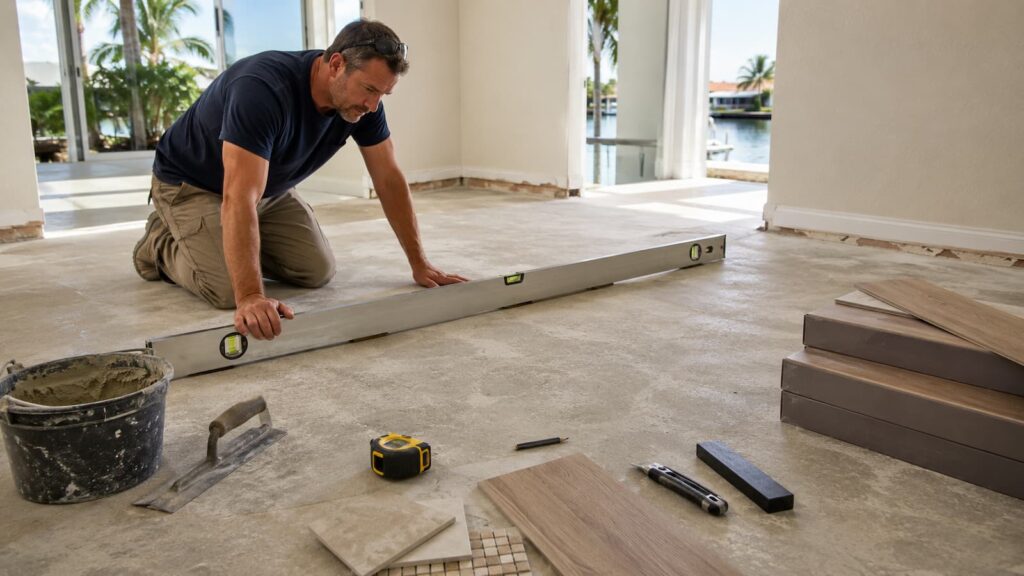
Checking floor flatness before installing LVP laminate or tile

How Flat Does a Floor Need to Be Before Installing LVP, Laminate, or Tile?

Before installing LVP, laminate, or tile, the floor underneath must be flat, stable, clean, and properly prepared. “Flat” does not always mean perfectly level, but dips, humps, ridges, low spots, soft areas, and uneven transitions can cause serious flooring problems. LVP and laminate can flex, click, gap, or separate over uneven areas, while tile can crack, loosen, or show lippage. This guide explains how flat a floor needs to be, why different materials have different tolerances, and when floor leveling or subfloor repair is needed before installation.

How Flat Does a Floor Need to Be Before Installing LVP, Laminate, or Tile? Read More »
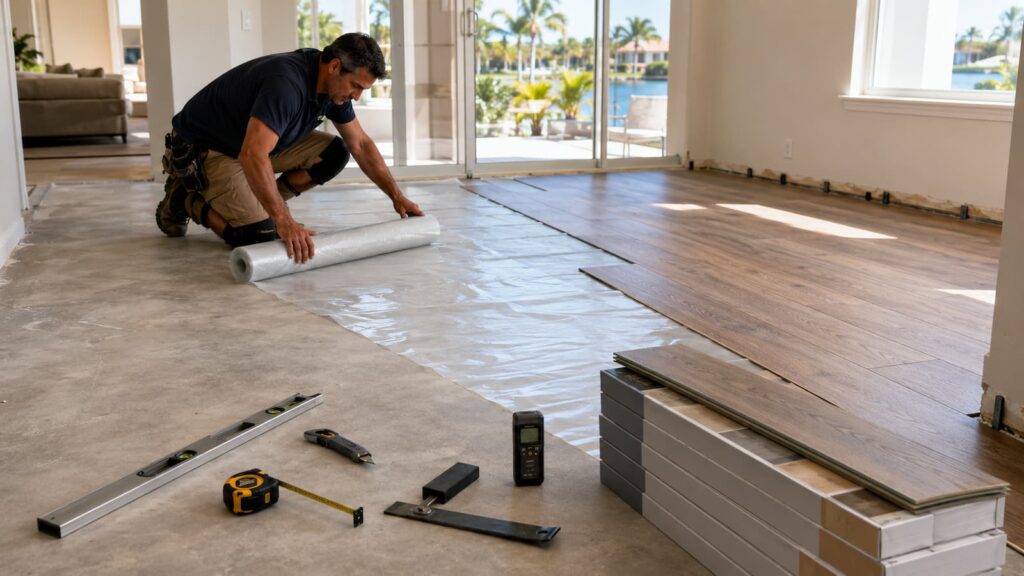
Moisture barrier under vinyl plank flooring on concrete slab

Do You Need a Moisture Barrier Under Vinyl Plank Flooring on Concrete?

A moisture barrier may be needed under vinyl plank flooring on concrete, but the answer depends on the LVP product, installation method, slab moisture conditions, and manufacturer requirements. Waterproof vinyl plank does not automatically mean the entire flooring system is protected from moisture. Concrete can release moisture vapor, and trapped moisture can affect underlayment, adhesive, baseboards, odors, and long-term performance. This guide explains when a vapor barrier is required, when it may not be needed, and what homeowners should check before installing LVP over concrete.

Do You Need a Moisture Barrier Under Vinyl Plank Flooring on Concrete? Read More »

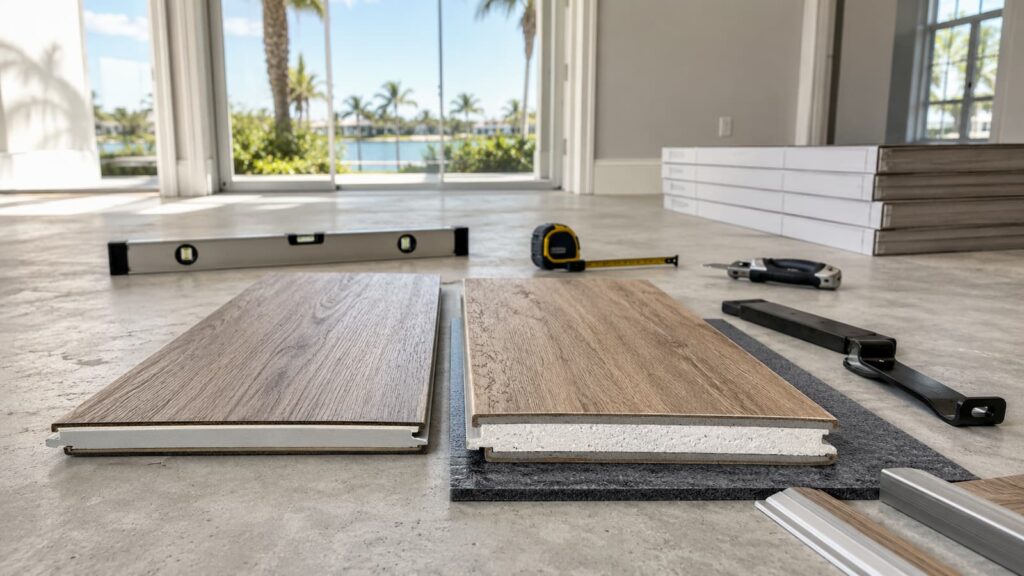
SPC vs WPC vinyl plank flooring comparison before installation

SPC vs WPC Vinyl Plank Flooring: What Homeowners Should Know Before Installation

SPC and WPC vinyl plank flooring are both popular rigid-core LVP options, but they feel and perform differently. SPC is usually denser, firmer, and more dent-resistant, while WPC is often softer, warmer, and more comfortable underfoot. For Florida homes, the best choice depends on the room, concrete slab condition, moisture risk, pets, traffic, comfort expectations, and installation quality. This guide explains what homeowners should know before choosing SPC or WPC vinyl plank flooring.

SPC vs WPC Vinyl Plank Flooring: What Homeowners Should Know Before Installation Read More »

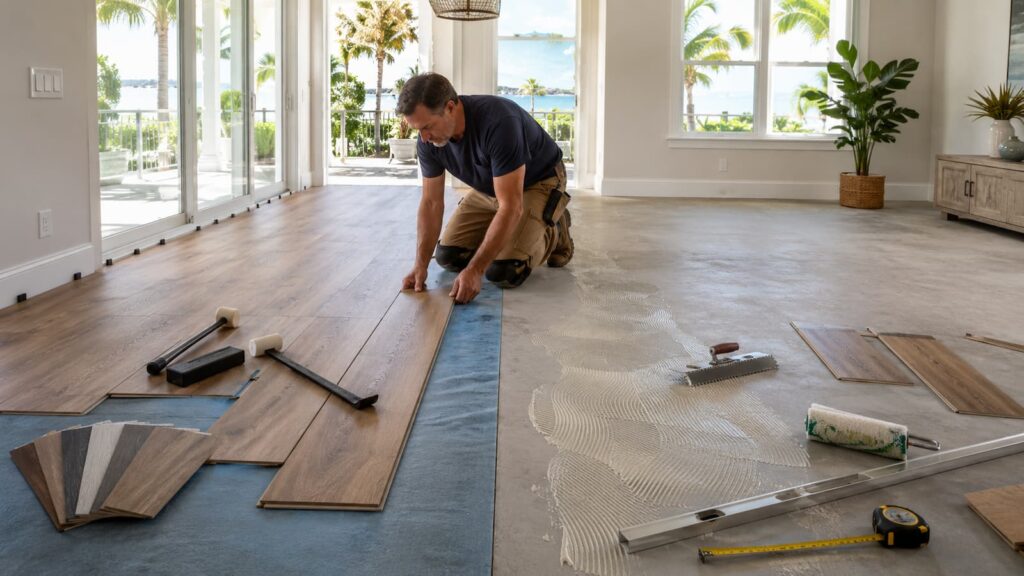
Floating vs glue-down vinyl plank flooring installation in a Florida home

Floating vs Glue-Down Vinyl Plank Flooring: Which Is Better for Florida Homes?

Floating and glue-down vinyl plank flooring can both work well in Florida homes, but they are not ideal for the same situations. Floating LVP is often the better choice for many residential living areas, bedrooms, and whole-home updates because it is efficient, comfortable, and easier to install over properly prepared concrete. Glue-down LVP can be better for certain high-traffic spaces, commercial-style use, large temperature swings, or areas where a lower-profile, firmly bonded floor is preferred. The best choice depends on slab condition, moisture risk, room use, product type, and installation quality.

Floating vs Glue-Down Vinyl Plank Flooring: Which Is Better for Florida Homes? Read More »